Showing posts sorted by relevance for query data. Sort by date Show all posts

Wednesday, November 5, 2014

On Data - Nathan Oostendorp / Mac Slocum / O'Reilly Radar (Thu 16 Oct 2014)

It is not the End It is the Beginning - Gozo / Malta (Tue 23 Sep 2014)

Nathan Oostendorp (*) writes on Data (*):
the next Industrial Revolution is about automating the collection of that data, it’s about being able to get insights out of that data that you wouldn’t be able to without a computer, and it’s about being able to do predictive and prescriptive adjustments to a [..] process
via Signals from Strata + Hadoop World New York 2014 (*) by Mac Slocum (o*).

I'm spending more and more time every day on this very thing. It is challenging and very interesting. Starting to make some breakthroughs with the software and with those who ask the questions. Often I am finding answers to questions that have not even been thought of, or asked. So in some ways it feels like a new beginning for an old dog like me.

Wednesday, November 3, 2010

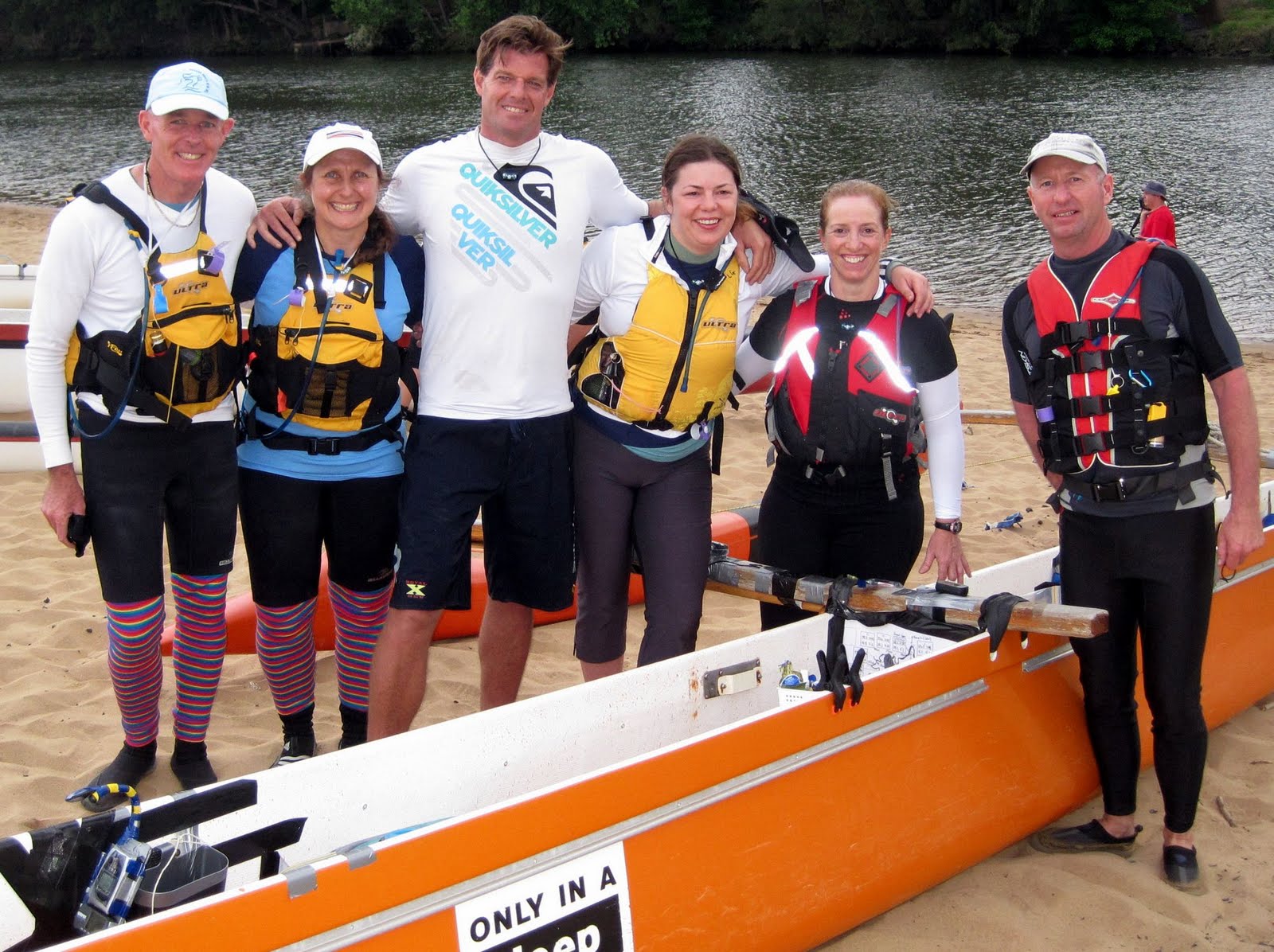
HCC 2010 Team Vela - Preparation

In preparing for the 2010 Hawkesbury Canoe Classic (2010 HCC) I looked at how we might be able to utilise GPS technology to assist us during the course of the paddle. I have a Locosys BT-31 (*) and a Garmin Forerunner 301.

Team Vela - Geoff Eldridge, Jo Petterson, Alasdair Grant, Charlotte Pache, Rachel Mosen and Graeme Bacon - Windsor - Sat 23 Oct 2010 (picasa)

The Locosys GT-31 has navigatiion capability where a course can be entered into the GPS and that the course can be tracked by following a directional bearing provided by the GPS.

The first step was to work out how to create and load a course into the Locosys GT-31. After a little bit of goolging, the following links proved useful:

It was decided that we should have our pit stops at Sackville and Wisemans (Dargyle near Checkpoint E is now not used as Pit Stop), so our attempt would be split the HCC into three sections. Namely:

  1. Sect 1 - Windsor to Sackville (29.2 km)


  2. Sect 2 - Sackville to Wisemans (29.3 km)


  3. Sect 3 - Wisemans to Brooklyn (40.3 km)
The course was then plotted on gmap-pedometer.com for each of the three sections of the HCC:

The resulting gmap-pedometer.com maps (see screenshots below) can be zoomed in/out and panned to follow the course in great detail. Hopefully, this demonstrates the kind of lines to follow in order to minimize the distance covered (however tide and weed have an impact on following other lines). Navigation can be done pretty much by sight in the full moon. There may be fog and dark spots along the course, so it is always helpful to know where we are.

Sect 1 - Start to Sackville (29.2 km - gmap / trkpt gpx)

Sect 2 - Sackville to Wiseman’s (29.3 km - gmap / trkpt gpx)

Sect 3 - Wiseman’s to Finish (40.6 km - gmap / trkpt gpx)

After some data massaging (a long post in itself - email for details at present), the resulting section files were uploaded into the Locosys GPS. The Garmin Forerunner 301 would be used as a backup for data recording purposes.

The next step was to come up with some kind of arrangement to see the GPS, particularly at night, where as a steerer, I did not have the opportunity to switch on the GPS Backlight. A booklight was suggested and an arrangement was planned for and put together on the day (see the following photo). The GPS can be seen in the bottom left corner of the Team Vela photo at the top of this post:

GPS Setup for Locosys and Garmin GPS's - Windsor (23 Oct 2010)

Having paddled the 2007 HCC, I had a GPS Result file which I could use to provide some estimates for arrival times at our pit stops at Sackville and Wisemans, to assist our great landcrew in preparing for our arrival.

One thing I found from the 2007 GPS Output, was that the distance travelled was 99.3km, which approximately 10% lower than the 111km length, the HCC has become famous. I also had a file with the Checkpoint GPS Cordinates (provided from the HCC website). These two files allowed calculation of the distances between each checkpoint so that a better estimate could be made of arrival times.

The other factor determining estimated arrival times was the tide. The HCC Organisers provided a Tide Chart and I plotted various arrival time lines (10, 11 and 12 hr) to determine where the tides would change. See the 2010 Tide Chart below, for more details:

HCC 2010 - Tide Chart with 12hr (Red),11hr (Blue) and 10hr (Green) finish times - Sat/Sun 23/24 Oct 2010 (pdf)

With all this information in hand, the following table was constructed:

HCC 2010 - Progress Chart - 2007 Times - Tide Estimate - 10km/hr Estimate

The Tide Estimate details were transferred onto an ammended HCC Progress Chart (see below). A laminated copy was available in the OC6 for the paddle.

HCC 2010 - Progress Chart based on Tide Estimate - Sat/Sun 23/24 Oct 2010

It was nice to be prepared and I will write up later how it all went on the night.

Monday, September 20, 2010

GPS - A Dragon Boat Training Session - Thu 13 Aug 2009

I have used a small GPS for my paddling since February 2007. Started out with a Garmin 305, and following its failure in Nov 2008, I moved to a Locosys GT31.

Have found the GPS output to be useful in gauging what is happening with the boat during a session (stopped looking at it in the boat a long time ago). Also, when comparing with other GPS outputs, we can see the outcomes of the our training over the course of the season or campaign.

I have developed and refined numerous spreadsheets and programs to process the data, and present some useful information in the form of graphs and tables. Ultimately, I hope to have a web site - www.gpspaddler.com (have registered the domain name and have lots of python code already written) - up and running (by writing this here, I will hopefully find the motivation to finish the web site off).

The following is an example. The reason I show this particular session, is that it stands out in my mind and shows a breakthrough in our performance and training. We had come a long way since early May 2009. It demonstrated that we had blended together as a team and we were definitely a strong crew (both physically and mentally) with potential to achieve our dreams. Aim to make the Final and anything is possible ..

The 500m Sets were done at Level 4 (a couple of notches below race pace) with a soft 20 Stroke Start (114m at 30s - the high 120m's is where you need to be competitive in an international race) with both 500m Sets done in around 2min 3secs. Certainly not world record pace, but for a long and intense training session, very respectable. Actually, I had not recorded such numbers in any boat in training on the Bay and remember being very excited when I downloaded and processed the data.

Over the next week we would change and refine our starts to a 25 Stroke Start for the 500m and a 30 Stroke Start for the 200m. I always found the 30 Start better and hoped that we would move to a 30 Start for the 500m's at some stage. We did this in our last race as a Mixed Crew (as George called it - "The Rabbit out of the Hat"), the Final of the Senior Mixed 500m in Prague on Sat 29 Aug 2009. It worked brilliantly.

[No secrets here - every campaign, boat, crew, technique and waterway is different. What's done is done and hopefully we can learn from every experience. The GPS definitely facilities the learning experience for the current session and campaign as well as for future campaigns.]

Session - Australian Senior Mixed Dragon Boat Team Training - GPS - Blackwattle Bay - Thu 13 Aug 2009


Set3/Side 1/500m@L4 - Australian Senior Mixed Dragon Boat Team Training - GPS - Blackwattle Bay - Thu 13 Aug 2009


Set4/Side 2/500m@L4 - Australian Senior Mixed Dragon Boat Team Training - GPS - Blackwattle Bay - Thu 13 Aug 2009


Set10/Side 2/Broken 500m - Australian Senior Mixed Dragon Boat Team Training - GPS - Blackwattle Bay - Thu 13 Aug 2009


Statistics - Australian Senior Mixed Dragon Boat Team Training - GPS - Blackwattle Bay - Thu 13 Aug 2009


It's Official - Senior Mixed 500m Final - Prague/Racice - Sat 29 Aug 2009

Friday, February 28, 2014

On Gifts and Photography - Jorg Colberg (Fri 28 Feb 2014)

Street Portrait - Harris Street / Ultimo (Mon 24 Feb 2014)

Jorg Colberg (*) writes On Photography (*):
There are gifts (*) everywhere, and you “just” need to be able to spot them, accept (*) them, work with them.
via Review: Emile Hyperion Dubuisson’s Far (*) by Jorg Colberg (*).

End of the first week in our new Office. A new stomping ground for my Street Portraits (*). The area is vibrant and I know it well from my time at UTS doing my Postgraduate Degree in Data Processing (what an old fashion term). Love it here already and I could not help but snap this photo of a building site worker out on his lunch hour with a nice balloon in tow.

An aside and thanks: Jorg Colberg (*) is my favourite writer on photography. He is able to abstract the essence of an experience, a book or whatever; and write so clearly and succinctly about it. He always gives you something to think about and I eagerly await his next post. Thanks Jorg.

Wednesday, April 30, 2014

On Noticing - The Story of Telling (Wed 30 Apr 2014)

Untitled - The Galleries Victoria / Sydney (Tue 15 Apr 2014)

The Story of Telling (*) writes the value of noticing (*):
Noticing (*) what people do is often more valuable to us than listening (*) to what they say they think.

[..] the trick to bringing things that matter to the world is not just to absorb information, but to make meaning (*) from it.
via The Value of Soft Data (*) by The Story of Telling (*).

Saturday, November 9, 2013

On Persistence and Tenacity - Seth Godin (Sat 02 Nov 2013)

Water - Ferry between Hvar and Split (Wed 31 Jul 2013)

Seth Godin (*) writes on Persistence (*) and Tenacity (*):
Persistence (*) is doing something again and again until it works. [..]

Tenacity (*) is using new data to make new decisions to find new pathways to find new ways to achieve a goal when the old ways didn't work.
via Tenacity is not the same as persistence (*) by Seth Godin (*).

Friday, December 19, 2014

On Failure - Venkat / Ribbonfarm (Fri 19 Dec 2014)

Flower Detail - Monet's Garden / Giverny (Wed 17 Sep 2014)

Venkat (*) writes on Failure (*):
You just have to have failed at a given level enough times to have become well-calibrated to the severity of your own responses, and effective at managing those responses. You are adapted to a domain at an advanced beginner level when you can keep trying indefinitely despite failing. You are at an intermediate level when you can look at failure data to learn, instead of being so traumatized you look away in aversion. You’re advanced when you begin failing in ways nobody has failed before.
via Learning from Crashes (*) by Venkat (*).

Friday, August 26, 2016

Saturday, March 7, 2015

Remembering Tim - Norwood Park Crematorium / Canberra (Fri 11 Mar 2005)

Tim (my Brother) and Tom (my Dad) - Norwood Park Crematorium / Canberra (Fri 27 Feb 2015)

Today, 10 years on, we Remember Tim:

Timothy Francis Eldridge was born on Wednesday 4 December 1963 in Tamworth NSW. He became the third and youngest child of Thomas and Betty. He had an elder sister, Lynn, spelt with two n's not one as Tim persisted throughout his whole life). Lynn was two years older than Tim. Myself, Geoff being 3 years older was the eldest. His father was an electrical engineer with the Electricity Commision of NSW. The Regional Centre was based in Tamworth and from this office the electricity transmission system in northern NSW grew. The nature of his Father's work often required nights away from home. We all looked forward to Dad's return on Friday Night with a bag of mixed lollies for all.

Lynn and I found as oursleves at school and this gave Tim two years at home with Mum by himself. Mum tells me now that he spent this time playing with the kids across the road. Even at this early age Tim was making friends. I seem to recall also that Tim managed to get a 1/2 day of pre-school (a first in the family). I always felt that this small period with other new kids gave Tim a nice head start when he commenced his schooling at South Tamworth Primary. He was well adjusted for the rigours of school, made friends easily (he was always going to birthday parties) and was a natural at anything he put his mind to.

He started in the top class in Kindy and there he stayed each year through his primary school days (and subsequent educational endeavours). Tim was a also a natural athlete and started playing rugby league at he age of eight, moving quickly onto soccer and then finally hockey (all in one year .. maybe this was a sign of things to come). He played representative hockey for Tamworth at the state champships every June Long Weekend. I even recall him playing under 12 hockey at Lismore when he was only 9. He was a prodigy even then. He also represented the North Western NSW primary school team in Murwullumbah where his team came back as state champions. Another little publicised sporting achievement was middle distance running and I remember him running a low 2 minute 800 meters at the Tamworth Primary Schools Athletic Carnival. A record that was not broken for many years.

The year Tim finished his primary school saw the Eldridge family move from Tamworth to Wagga for Dad's work. This was a tough time for everyone but we all adapted to new environs and our new high school in Wagga called Kooringal High. It was a new school and much smaller than the high school Lynn and I left in Tamworth. Probably 1/4 the size in students and was so new that it did not even have a sixth form in our first year there. Tim as always fitted in very quickily and he found new friends almost instantly. Many of whom are here today.

By the time Tim reached Wagga he had found the game of golf and before long he was swinging a set of clubs out at the Wagga Country Club, across the lake from where we lived. Here he spent many hours fine tuning his tee shots, fairway shots, chips and putts (or spits as his young nephew would subsequently refer, many years later). Golf was to become a life long passion and this was something which always stayed with him. It was only his 94 year old grandfather who thought something was wrong four weeks ago when he percieved Tim had lost interest in his Golf.

Tim breezed through high school and obtained excellent grades with little effort. In his final year he was nominated as perfect (whooops I meant "a prefect") and was voted school vice captain by his peers. For his HSC he studied a couple of hours each night on the floor in front of the TV. To recover from this strenous study regime, he would spend the next day playing 36 holes of golf.

With his HSC behind him Tim entered the University of Sydney and worked his way towards a Civil Engineering degree over a four year period. The first two years of his course, Tim lived at Wesley College, a residential college on the grounds of Sydney University. Here, Tim, along with some of high school buddies quickily adapted to the demanding University life style. Days at the beach, missing lectures, drinking beer, etc. He found new friends quickily and again many are here today. The nucleaus of this group were quickily dubbed the "DAMAGE BOYS" because of the drinking reputation at College Victory Dinners, formals and other ramdon gatherings.

Mid way through his second year, Tim's father Thomas passed away suddenly at the early age of 47 after a sunday afternoon hockey match. It was my job to tell Tim the news that Sunday night. I now remember his numb response to my news. "Where has he gone?" he asked. His fathers death at such a young age for all of us was a defining moment in Tim's life (probably the most defining moment up until last Saturday). It was a difficult time for Tim and the Family. Initially he seemed to cope well, but the next year saw Tim arrive home to Wagga unannounced many times during the university terms. I guess the one lesson (or theory actually I would call it a LAW) Tim would give us today from all this would be to grieve properly, seek support from Family, Friends and professionals and to address the difficult issues these tramatic events have on the fragile human soul.

Anyway, back to Uni, Tim bravely persisted and graduated with honours at the end of 1985. His brief but eventful civil engineering career started with a small but prestigous Civil Engineering Consultating companycalled Wargon, Chapman and Partners. Mr Wargon, a famous Amercican civil engineer appeared to take Tim under his wing and Tim quickily found himself designing car parks, and tall buildings. As well as doing one-off type jobs such as a structural integrity report of the Channel 9 Transmitter Antenna at the Channel 9 Compound, and preliminary designs for the now Sydney Harbour Tunnel.

Tim quickily realised that Civil Engineering was not for him (however a recent rush of activity with home decks shows there was some latent interest in at least some things civil). On the fifth redesign for an Alan Bond tower on the old Waltons site across from the Sydney Town Hall, Tim decided to move on. This gave him the chance to travel for 3 months overseas which took him to many places in Europe, England, particularly London and even India (if I recall correctly).

London was a place to which Tim would return frequently over the rest of his life, the last being July/August last year. The drawcards to London were friends and another life passion I have not yet mentioned, English Football. His favourite team during his schools days was Queens Park Rangers. Though his interested waned when their goalie Phil Parkes defected to my team West Ham in 1977 for a then world record sum of 565,000 pounds. Subsequent years and more recently Tim has been an Arsenal supporter.

On his return in the late 80's Tim persued his ambition for a new career. In this pursuit he found himself in Canberra studying part-time for a degree in Information Systems at the then Canberra College of Advanced Education and working part-time for small scientific software consulting firms. One system I remember was a flight simiulator program driven by data from aircraft black-box recorders.

On graduation from the CCAE Tim started work at Customs and then Department of Veterans Affairs for a record three years. Towards the end of this stint in DVA, Tim bought his house in Griffith, just up from Marnucka. He lived in the house briefly before deciding that a six month stint in Los Angles working on a Telon Related Inventory system was the go. On his return he decided to work in Sydney and here he had stints at NRMA and Westpac. Weekends saw Tim travelling back to his home in Canberra to catch up with friends and to play golf amongst other things. This became too tiring and before long he was back in Canberra fulltime working at the Australian Tax Office and subsequently Customs. His crowning software achievement was an ATO case-actioning tool which I believed was to be a distillation of systems and processes from the many places he had worked.

More recently, Tim returned to DVA where he ventured into web-based systems using packages such as Websphere and Tomcat.

Wherever Tim worked, he took the roles on seriously. He appeared to very much love a process and a set of rules to capture and implement. He believed rules were meant not to be broken (contrary to the majority of the population) and I always thought that he was perfect fit for the ATO. [He had a great sense of what was right and doing it right].

Another constant in Tim's life were his friends and I will always remember his 40th birthday speech where he said the party was not to celebrate his 40th, but more importantly, a chance for his family and friends to get together.

There is so much more to be said. We all have our memories of Tim and I ask you for just one moment to reflect on the good times you had with him ... and to take this forward with you through the tough times ahead.

It is now time to say goodbye to a loving son, brother, grandson, nephew, uncle, friend and colleague. We now know that Tim struggled with a delibertating and destructive illness which he held undercover for many years. I ask you to take the time to consider the strength he showed under this enormous pressure and to admire him for how he lived a relatively normal and happy life, shared with friends and family.

In the end Tim ran out "Puff" as he said and found peace from his illness the only way he knew how. Please forgive him. He asked for this.

Tim, you asked me where Dad had gone. We know that you searched for him high and low. We also now know that you have found him. The search and struggle is complete and that you have found your peace.

You will always have a special place in our hearts and memories. We will miss you.

Love .. Mum, Lynn and Geoff ..