Another Favourite Blog Post by Drew Ginn. This time about coaches and coaching titled Coaches & Coaching: The Art Form (Tue 24 Jun 2008) ..
[..] From directing, to coaching, to supporting and delegating. It's important to understand that coaches need to be adaptable and flexible in the style to best suit the athlete and the situation.
From what I have been exposed to over the years I have had coaches who have all been different and at certain times they have suited my needs and other time they have not quiet matched up to what I have needed. This has also played out in relation to the situation also.
Recently our coach, Chris worked on being more directed and coaching in his style. After we got back into things it was required that he shift his focus to suit our situation. It was a different energy and help us greatly in getting the ball rolling again. We have been good at working with him in a more supportive and delegating way which relates to our experience and willingness to be involve and responsible for our preparation and performance.
Years ago with the four, Noel Donaldson was great at managing the group and as such operated well in a supportive capacity. This did not mean at times he didn't shift into directing the group and coaching but it was often a quick switch and very effective in getting a response.
Now when I think of my development years at times I need a good kick up the ass. And well I had a few good coaches that did it perfectly. My only concern with this style of directing is that at some point the emphasis needs to shift and if it doesn't then problems and or confusion can grow.
In Australia right now we have a large variety of coaches with such a range of experiences and history in the sport. I am sure there is a different level of ambition and ego too. Surely they are no different to the athletes in one sense. They want to be the best they can be. They want to be the best. They I would have thought would want what is best for their athletes. Some times these two things can be in conflict which to me is the coaching dilemma.
This [leads] me to consider what it can be like in a crew also. In fact it goes to the heart of teamwork and why it can be so challenging to get it right. In a boat you want to do the best you can. You also want the team to do it best. You want everyone one to do there best. The dilemma then is what is the priority then? What are you measure by? What drives what and what can bring it all undone? These question like the coaches dilemma are very important in understanding why some times things work and other times they don't.
At this level everyone has ability and everyone has performed in a way to get to where they are. There fine line between wanting something for your self and wanting something for others is a fickle and often precarious position. You need to be motivated to be the best, but this need has to stay in check with relation to the motivation for the collective effort.
I mention all this because coaching like rowing is about balancing the influences, expectations and needs of all involved. Although the coaching view of things is some what objective if this is all that is focused on then the nature of the art form is lost in the numbers. The subtlety of shifting and adapting is needed with out being reactionary. A coaches view is often more comprehensive. They have to take in more information about performance on and off the water. This is the challenge and to honor all perspective is critical.
Coaches like athlete need to be masters of their art form to have longevity. When I say master I refer to the ability to stay even in their presence and maintain consistency while subtly shifting focus based on what the situation requires.
As an athlete I know I need a coach. I enjoy having a person who I can work with to enable the best outcome. I have been fortunate to have what I would say as some of the great coached from our sport. Noel and Chris have been a major factor in me getting this far and assisting in helping me to not only be a better athlete but better person.
This I am sure is not unique to me, I am sure many athletes have and will continue to feel this way about their coaches.
Lots to think about in this one.
Showing posts sorted by relevance for query style. Sort by date Show all posts
Showing posts sorted by relevance for query style. Sort by date Show all posts
Sunday, July 3, 2011

Saturday, July 9, 2016
Street Photography - Jesse Marlow / Ray Edgar (Sat 09 Jul 2016)
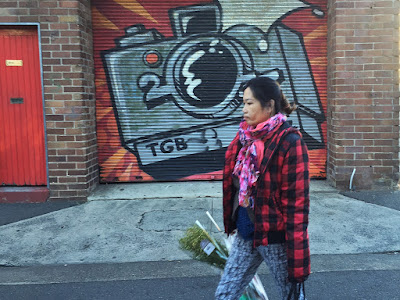
Jesse Marlow on Street Photography:
The essence of street photography is that it won't be the same in an hour's time .. It's about developing a stylevia Has Instagram changed photography forever? CCP's birthday brings the present into focus by Ray Edgar.
Maybe I have developed my own style on the street? Something I will explore more with time.
Thursday, September 27, 2012
Gangnam Style - PSY / Youtube
Saturday, December 12, 2009
Thank You: RPM ..
I started RPM (an interval based stationary bike programme with 7 cherographed training tracks) at Sydney University's Aquatic Centre's RPM Studio on Fri 11 May 2007. I was so "pumped" and I can still remember calling Jenny almost straight after the session to say that it was everything (plus more) that I hoped it would be. Jenny and Jo had told me about their "Spinning Classes" and how much they enjoyed it. I had finally found the same thing - thanks Jenny and Joanne.

RPM Studio - Sydney Unit Aquatic Centre (Mon 30 Nov 2009)
I had been toying with the idea of doing some Group Fitness at the Sydney Uni Gym. My membership at the time allowed me to use the Gym equipment only. The previous weekend I had successfully trialled for the Australian Senior Open's Dragon Boat team to participate at the 2007 IDBF World Dragon Boat Championships. I was looking for something new and thought I needed to try something different, to compliment the running I was doing for my cardio.
I was a little nervous about the joining the Group Fitness Programmes and in my normal way, I put it off until I read a blog post by Drew Ginn titled:
I had been following Drew's Blog for a few months. I had really connected to his writing style (particularly the grammatical and spelling errors :-) and found all his articles to be very motivating. Being a Rower, his articles could easily be translated and related to my world of dragon boating [in actual fact, I have felt that I have almost lived a parrallel life, though not quite at the same level :-) ]

Vincent and Geoff - RPM Sydney Uni Aquatic Centre (Fri 27 Nov 2009)

Heart Rate - First RPM Class - Fri 11 May 2007 (Vincent)
The Ridden into the ground and loving it post was a motivating story, but it was the following quotes that really caught my eye:
[..] The remarkable thing is each time I go into this place, into this zone I find something special, something new. [..]
[..] The pleasure is in the relationship the lies within the range and scope of extremes. The vastness of feelings marks a cycle. Not just the one we ride but the one that is ever present inside us. [..]
These were the feelings I wanted to explore more. Maybe RPM could accelerate what I had already learnt in the boat.
RPM has turned out to be one of the best decisions I have ever made regarding my development. It has been everything I hoped it would be, plus more.
What have I found in RPM? I have found many things: discipline, the cherography for each track requires a mental discipline. A sense of timing and feeling: the music and tracks require a feeling for the beat and rythym - much like the feeling you need to find when paddling. The interval based workout requires a measured approach to your effort. On top of all of this you become very fit.

Ali and Geoff - RPM Sydney Uni Aquatic Centre (Mon 30 Nov 2009)
When I first started I would hide in the middle of the class and try not to be noticed as I do with most things. As my confidence and understanding grew, I bought a pair of bike shoes with clips (the 2007 Tour de France really motivated me there). With the new shoes, I had to move upto the front row where the bikes with toe clips were. It was a great move. It helped me with my dragon boating (even more), where I had just started to stroke (i.e. sit in the front seat). I started to develop a sense of feeling the energy, and timing behind and around me - it is very similiar to stroking a boat.

Loulou and Geoff - RPM Sydney Uni Aquatic Centre (Tue 01 Dec 2009)
One of the bests parts of RPM for me has been the people. Vincent is the head instructor at the Gym and has worked (and still teaches instructors across Australia) for Les Mills (an Auckland based company) who run and develop the RPM Programme worldwide. James has been an instructor for years and is probably one of the best instructors in Australia - he brings his mountain bike experiences to the class. I have seen both Ali (she started the same time as me) and Loulou go from participants to intructors who run amazing classes and bring their own personalites to each session. Vincent has taught them well, it has been a delight for me to watch their progress and development. As I said, this has been one of the best parts of RPM for me and they have inspired me in my own endeavours.

James and Geoff - RPM Sydney Uni Aquatic Centre (Wed 02 Dec 2009)
These people have contributed significantly to make me the person and athlete I am and I can't thank them enough. Just recently I personally thanked each person and gave them a copy of Jenny's Gold Medal story with a big thank you for their part in my development. Also took the chance to get a photo.
Thank you Vincent, Ali, Loulou and James and all the RPM team at Sydney University Aquatic Centre.
Geoff

I had been toying with the idea of doing some Group Fitness at the Sydney Uni Gym. My membership at the time allowed me to use the Gym equipment only. The previous weekend I had successfully trialled for the Australian Senior Open's Dragon Boat team to participate at the 2007 IDBF World Dragon Boat Championships. I was looking for something new and thought I needed to try something different, to compliment the running I was doing for my cardio.
I was a little nervous about the joining the Group Fitness Programmes and in my normal way, I put it off until I read a blog post by Drew Ginn titled:
I had been following Drew's Blog for a few months. I had really connected to his writing style (particularly the grammatical and spelling errors :-) and found all his articles to be very motivating. Being a Rower, his articles could easily be translated and related to my world of dragon boating [in actual fact, I have felt that I have almost lived a parrallel life, though not quite at the same level :-) ]


The Ridden into the ground and loving it post was a motivating story, but it was the following quotes that really caught my eye:
[..] The remarkable thing is each time I go into this place, into this zone I find something special, something new. [..]
[..] The pleasure is in the relationship the lies within the range and scope of extremes. The vastness of feelings marks a cycle. Not just the one we ride but the one that is ever present inside us. [..]
These were the feelings I wanted to explore more. Maybe RPM could accelerate what I had already learnt in the boat.
RPM has turned out to be one of the best decisions I have ever made regarding my development. It has been everything I hoped it would be, plus more.
What have I found in RPM? I have found many things: discipline, the cherography for each track requires a mental discipline. A sense of timing and feeling: the music and tracks require a feeling for the beat and rythym - much like the feeling you need to find when paddling. The interval based workout requires a measured approach to your effort. On top of all of this you become very fit.

When I first started I would hide in the middle of the class and try not to be noticed as I do with most things. As my confidence and understanding grew, I bought a pair of bike shoes with clips (the 2007 Tour de France really motivated me there). With the new shoes, I had to move upto the front row where the bikes with toe clips were. It was a great move. It helped me with my dragon boating (even more), where I had just started to stroke (i.e. sit in the front seat). I started to develop a sense of feeling the energy, and timing behind and around me - it is very similiar to stroking a boat.

One of the bests parts of RPM for me has been the people. Vincent is the head instructor at the Gym and has worked (and still teaches instructors across Australia) for Les Mills (an Auckland based company) who run and develop the RPM Programme worldwide. James has been an instructor for years and is probably one of the best instructors in Australia - he brings his mountain bike experiences to the class. I have seen both Ali (she started the same time as me) and Loulou go from participants to intructors who run amazing classes and bring their own personalites to each session. Vincent has taught them well, it has been a delight for me to watch their progress and development. As I said, this has been one of the best parts of RPM for me and they have inspired me in my own endeavours.

These people have contributed significantly to make me the person and athlete I am and I can't thank them enough. Just recently I personally thanked each person and gave them a copy of Jenny's Gold Medal story with a big thank you for their part in my development. Also took the chance to get a photo.
Thank you Vincent, Ali, Loulou and James and all the RPM team at Sydney University Aquatic Centre.
Geoff
Sunday, November 29, 2009
A Familiar Path - "A Walk to Remember" ..
A Familiar Path by Doug Miller:
[..] A single step repeated hundreds and thousands of times would eventually arrive at the end. It did not take superhuman strength or a talent that most do not have. It took a steadfast commitment. Step by step as the miles added up and the challenges slipped by. Today just like those days on the trail, is another step. Tomorrow yet another. I walk this journey in anticipation of the end, but I also know that there is much to learn in the process. It is the process, no matter what the hardship where great beauty and adventure can be found.

Jenny and Joanne - Main Range Walk - Path to Blue Lake - 06 Jan 2002
Around New Year, each year for the last 10 years we have traveled to the Snowy Mountains area (around Perisher Valley and Jindabyne) to get away from the Christmas/New Year Crowds, to relax and take in the sights of the Snowy Mountains.
Each year we would take the opportunity to challenge ourselves to the 22km Main Range Summit walk, to not only witness the beauty of the mountains, but to test ourselves and to benchmark our fitness to the previous years effort. This was particularly important for Jenny. She and we could see what effect her cancer and treatment was having on her physical body, for the previous 12 months.

Wild Flowers - Snowy Mountains Main Range Walk - 29 Dec 2005
Some years were easy, while others were more challenging, particularly the long and steep uphill leg from the Blue Lake to the Summit of Mt Kosciuszko.
One of the more difficult years for Jenny was January 2008 when a side-effect from one her treatments, which caused soreness and tenderness of her feet (Hand-Foot Syndrome), made it very difficult for her to walk even a few steps. This did not stop her and she did the 22km walk, one painful step at a time. I was so proud of her, though, in typical Jenny style she thought it to be nothing unusual.

Snowy Mountains Main Range Walk - 29 Dec 2005
On the first day of this year, we did the Main Range walk, for what would turn out to be our last time together. While temperatures in Sydney were the typical balmy 30's, the weather in the Mountains had turned and there was a wind chill factor of -15 deg C. This was our last day to do the walk, we were prepared with Jenny and Joanne wearing seven layers, with beanies and gloves. We decided to at least walk the first 6 km to the Blue Lake and make a decision there whether to continue on for the next 16km or return.
For all of us, the conditions were challenging. However, for Jenny the extra challenges which revolved around dealing with the many issues relating to her cancer, the most obvious for this higher altitude challenge, being the tumors in her lungs. Little did we know at that stage the cramping in her stomach she had experienced a few times over the previous month or so, would be the early signs of countless tumors in her liver, which would be diagnosed in early March 2009. On top that, was also the embryonic stages of a tumor in her brain, which would manifest itself as a 4cm tumor in early June 2009.

Jenny and Joanne - Lake Albina - 29 Dec 2005
Needless to say, this was the most difficult Main Range Summit challenge for all of us, and for Jenny in particularly. She was short of breath, even on the small downhill sections. As we reached the Blue Lake, we waited quite a while and we left it up to Jenny to decide what we should do. Eventually, she said she felt she could do it, so off we nervously set, in very strong head winds, to the Summit. We stopped at Lake Albina on the way.

Jenny & Joanne - Lake Albina - Mt Kosciuszko Main Range Summit Walk - 01 Jan 2009
Every step was a struggle for Jenny and she did amazingly well to make it to the Summit. As usual we would take our Summit top photos - this time there was no one there (usually there would be 20-30 people) as we had taken twice as long as normal and we had reached the Summit hours after everyone had headed back to their starting points.

Jenny and Joanne at the Mt Kosciuszko Summit - Mt Kosciuszko Main Range Summit Walk - 01 Jan 2009
When I read the little story (it was a few weeks ago now) from where the above quote comes from, I thought of Jenny initially, and later Joanne and myself. I think it has helped me understand, that we were not only doing this walk each year (with each year being a "step") for the physical beauty and challenge of the Mountains, but also for the beauty that can be found in the "process" of doing something like this each year. I think it also helps me appreciate the difficult "steps" that Joanne and I take each day, without Jenny's physical presence in our lives - but knowing we are "getting on with life" with the support of our family and friends, and knowing many great experiences and adventures lay ahead for us and those in our lives. We know this to be true - we have already witnessed this in Prague in late August 2009 - "Touched by Jenny".
Joanne, David and I will do the Main Range walk this year, probably on the 1 January 2010. We know Jenny will be with us every step of the way.

Jenny and Joanne - Main Range Walk - 06 Jan 2002
Just another little story of perserverance and determination from Jenny.

Jenny near Mt Kosciuszko Summit - 06 Jan 2002
[..] A single step repeated hundreds and thousands of times would eventually arrive at the end. It did not take superhuman strength or a talent that most do not have. It took a steadfast commitment. Step by step as the miles added up and the challenges slipped by. Today just like those days on the trail, is another step. Tomorrow yet another. I walk this journey in anticipation of the end, but I also know that there is much to learn in the process. It is the process, no matter what the hardship where great beauty and adventure can be found.

Around New Year, each year for the last 10 years we have traveled to the Snowy Mountains area (around Perisher Valley and Jindabyne) to get away from the Christmas/New Year Crowds, to relax and take in the sights of the Snowy Mountains.
Each year we would take the opportunity to challenge ourselves to the 22km Main Range Summit walk, to not only witness the beauty of the mountains, but to test ourselves and to benchmark our fitness to the previous years effort. This was particularly important for Jenny. She and we could see what effect her cancer and treatment was having on her physical body, for the previous 12 months.

Some years were easy, while others were more challenging, particularly the long and steep uphill leg from the Blue Lake to the Summit of Mt Kosciuszko.
One of the more difficult years for Jenny was January 2008 when a side-effect from one her treatments, which caused soreness and tenderness of her feet (Hand-Foot Syndrome), made it very difficult for her to walk even a few steps. This did not stop her and she did the 22km walk, one painful step at a time. I was so proud of her, though, in typical Jenny style she thought it to be nothing unusual.

On the first day of this year, we did the Main Range walk, for what would turn out to be our last time together. While temperatures in Sydney were the typical balmy 30's, the weather in the Mountains had turned and there was a wind chill factor of -15 deg C. This was our last day to do the walk, we were prepared with Jenny and Joanne wearing seven layers, with beanies and gloves. We decided to at least walk the first 6 km to the Blue Lake and make a decision there whether to continue on for the next 16km or return.
For all of us, the conditions were challenging. However, for Jenny the extra challenges which revolved around dealing with the many issues relating to her cancer, the most obvious for this higher altitude challenge, being the tumors in her lungs. Little did we know at that stage the cramping in her stomach she had experienced a few times over the previous month or so, would be the early signs of countless tumors in her liver, which would be diagnosed in early March 2009. On top that, was also the embryonic stages of a tumor in her brain, which would manifest itself as a 4cm tumor in early June 2009.

Needless to say, this was the most difficult Main Range Summit challenge for all of us, and for Jenny in particularly. She was short of breath, even on the small downhill sections. As we reached the Blue Lake, we waited quite a while and we left it up to Jenny to decide what we should do. Eventually, she said she felt she could do it, so off we nervously set, in very strong head winds, to the Summit. We stopped at Lake Albina on the way.

Every step was a struggle for Jenny and she did amazingly well to make it to the Summit. As usual we would take our Summit top photos - this time there was no one there (usually there would be 20-30 people) as we had taken twice as long as normal and we had reached the Summit hours after everyone had headed back to their starting points.

When I read the little story (it was a few weeks ago now) from where the above quote comes from, I thought of Jenny initially, and later Joanne and myself. I think it has helped me understand, that we were not only doing this walk each year (with each year being a "step") for the physical beauty and challenge of the Mountains, but also for the beauty that can be found in the "process" of doing something like this each year. I think it also helps me appreciate the difficult "steps" that Joanne and I take each day, without Jenny's physical presence in our lives - but knowing we are "getting on with life" with the support of our family and friends, and knowing many great experiences and adventures lay ahead for us and those in our lives. We know this to be true - we have already witnessed this in Prague in late August 2009 - "Touched by Jenny".
Joanne, David and I will do the Main Range walk this year, probably on the 1 January 2010. We know Jenny will be with us every step of the way.

Just another little story of perserverance and determination from Jenny.

Tuesday, March 23, 2010
Photographer: Murray Fredericks
Murray Fredericks is an Australian Photographer. I was aware of him and his works from my foray into large format photography. I had bought a 4x5 inch large format camera in Shanghai in November 2004 (that's another story) and I needed to learn how to use it. Murray was offering a weekend workshop at a rural location in western NSW, near Oberon, and I had considered attending. With assistance of my friend Leigh Perry, I was able to work it all out and did not need to take Murray's workshop in the end. Some scans of my initial transparencies, by an Epson 4990 scanner, are here
I follow news regarding photography and photography exhibitions in Sydney - typically article written by Robert McFarlane who writes occasionally for the Sydney Morning Herald (just found he has a blog at ozphotoreview.blogspot.com). I have known of Murray since the time his work was exhibited at the Point Light Gallery in 2003. His initial SALT work was also reviewed by Robert McFarlane
When flying to Prague, on the flight to Prague from Helsinki on FinnAir, I was pleasantly surprised and delighted to read an English Newspaper (The Financial Times) that had a review of Murray's exhibition in London at the Hamiltons Gallery in Mayfair. I pulled out the page inflight and put it away with a mental note to make sure I would find the Gallery and view the Salt Exhibition when in London a few weeks later. Was very impressed to read that his photos were being compared to Turner paintings and that the largest and most expensive photo was being sold for 30,000 Pounds - pretty impressive for a humble landscape photographer who started his career as an Economist from Sydney University.

Blue Sky Thinking - Murray Fredericks - SALT II - A Newspaper Article found inflight between Helsinki and Prague - Sat 22 Aug 2009 - (picasa)
The day before the Great River Race, I had organised our seats on boats and I had time to do some sight seeing in London. I found the Gallery using Google Maps and made my way there on the Tube. I found the Gallery easily and chatted with the Gallery guy, who gave my a DVD of the SALT Documentary of his trip to Lake Eyre. Managed to sneak in a few photos before I left for the Photographers Gallery (yet another story), which was walking distance away (well maybe at least a couple hours rambling through the back streets of London).

Murray Fredericks: Salt Exhibition - Hamiltons Gallery / London - Fri 04 Sep 2009 (picasa)

Murray Fredericks: Salt Exhibition - Hamiltons Gallery / London - Fri 04 Sep 2009 (picasa)

Murray Fredericks: Salt Exhibition - Hamiltons Gallery / London - Fri 04 Sep 2009 (picasa)

SALT37 by Murray Fredericks - Sep 2009 (www.gosee.de)

Self Portrait in Lake Eyre - Hamiltons Gallery / London - Fri 04 Sep 2009 (picasa)
The ABC are showing his SALT Documentary tonight. There was a review in yesterdays Sydney Morning Herald titled - Searching for infinite space in extreme locations. An extract follows:

Murray Fredericks - Sydney Morning Herald 22 Mar 2010 - Searching for infinite space in extreme locations - Tue 23 Mar 2010 (picasa)
Having been "the guy with a camera" at high school who took pictures of sports teams, Fredericks was a serious photographer with commercial and artistic ambitions in his mid-twenties. He shot what he calls traditional coffee table-style photos until he realised he wanted more from his work.
"I reached the point where I went through everything and went 'there's nothing new here'. All I'm doing is finding new angles and new locations but the message itself - and the way the message is delivered - isn't changing'," he says.
"So I went through everything again and I thought 'which images affect me differently?' and they were the images that conveyed a sense of space."
That discovery has taken Fredericks 14 times to Lake Eyre in outback South Australia in the past six years. His aim was to photograph the flat salt plain with its low horizon and lack of distinctive features.
Hauling his gear to the location by bicycle, he spent up to five weeks by himself trying to capture the nothingness. And when things changed, he wanted to capture that too.
"Everything happens on the cusp, on the change,'' he says. ''It's the transition periods that are interesting because that's when the stuff you can't imagine or you can't expect happens."
Fredericks's shots of land and sky have proven so popular there are three galleries - in Sydney, Melbourne and London - waiting for his new work.

SALT 8 by Murray Fredericks
Found a nice review by Rebecca Wolkenstein who writes:
.. it wasn’t until I viewed his film SALT, that I decided my roster couldn’t live without him. The film and the work had a spiritual element I had never really understood before then. It sounds rather dramatic to be speaking this way, doesn’t it? When the film comes out [..], I highly recommend that you immerse yourself in the landscape. It’s full of surprises.

SALT 5 by Murray Fredericks
My friend Leigh Perry shoots very similar photos, but typically from the shore of Sydney's coastline - see his portfolios: Invariance and Peripheral Vision. Beautiful photos ..

Invariance #116011 - Reef by Leigh Perry

Invariance #332 - Lake. by Leigh Perry
I follow news regarding photography and photography exhibitions in Sydney - typically article written by Robert McFarlane who writes occasionally for the Sydney Morning Herald (just found he has a blog at ozphotoreview.blogspot.com). I have known of Murray since the time his work was exhibited at the Point Light Gallery in 2003. His initial SALT work was also reviewed by Robert McFarlane
When flying to Prague, on the flight to Prague from Helsinki on FinnAir, I was pleasantly surprised and delighted to read an English Newspaper (The Financial Times) that had a review of Murray's exhibition in London at the Hamiltons Gallery in Mayfair. I pulled out the page inflight and put it away with a mental note to make sure I would find the Gallery and view the Salt Exhibition when in London a few weeks later. Was very impressed to read that his photos were being compared to Turner paintings and that the largest and most expensive photo was being sold for 30,000 Pounds - pretty impressive for a humble landscape photographer who started his career as an Economist from Sydney University.

The day before the Great River Race, I had organised our seats on boats and I had time to do some sight seeing in London. I found the Gallery using Google Maps and made my way there on the Tube. I found the Gallery easily and chatted with the Gallery guy, who gave my a DVD of the SALT Documentary of his trip to Lake Eyre. Managed to sneak in a few photos before I left for the Photographers Gallery (yet another story), which was walking distance away (well maybe at least a couple hours rambling through the back streets of London).


The ABC are showing his SALT Documentary tonight. There was a review in yesterdays Sydney Morning Herald titled - Searching for infinite space in extreme locations. An extract follows:

Having been "the guy with a camera" at high school who took pictures of sports teams, Fredericks was a serious photographer with commercial and artistic ambitions in his mid-twenties. He shot what he calls traditional coffee table-style photos until he realised he wanted more from his work.
"I reached the point where I went through everything and went 'there's nothing new here'. All I'm doing is finding new angles and new locations but the message itself - and the way the message is delivered - isn't changing'," he says.
"So I went through everything again and I thought 'which images affect me differently?' and they were the images that conveyed a sense of space."
That discovery has taken Fredericks 14 times to Lake Eyre in outback South Australia in the past six years. His aim was to photograph the flat salt plain with its low horizon and lack of distinctive features.
Hauling his gear to the location by bicycle, he spent up to five weeks by himself trying to capture the nothingness. And when things changed, he wanted to capture that too.
"Everything happens on the cusp, on the change,'' he says. ''It's the transition periods that are interesting because that's when the stuff you can't imagine or you can't expect happens."
Fredericks's shots of land and sky have proven so popular there are three galleries - in Sydney, Melbourne and London - waiting for his new work.

Found a nice review by Rebecca Wolkenstein who writes:
.. it wasn’t until I viewed his film SALT, that I decided my roster couldn’t live without him. The film and the work had a spiritual element I had never really understood before then. It sounds rather dramatic to be speaking this way, doesn’t it? When the film comes out [..], I highly recommend that you immerse yourself in the landscape. It’s full of surprises.

My friend Leigh Perry shoots very similar photos, but typically from the shore of Sydney's coastline - see his portfolios: Invariance and Peripheral Vision. Beautiful photos ..


Wednesday, September 8, 2010
The Climb - Our Main Range Summit Challenge
The Climb - The Main Range Range Summit Challenge
Dragons Abreast Ausrtralia Seminar
Cancer Council Queensland
Tuesday 31st August, 2010
Next is a little story that covers another aspect of Jenny’s Life – our annual trip to the Snowy Mountains and our Main Range Mt Kosciuszko Summit Challenge.
The Colorado Trail is just short of 500 miles in length. Doug Miller spent a summer (approximately 60 days) hiking the trail. In August 2009 he was diagnosed with Cancer.
A few months into his journey with Cancer, he wrote about the lessons he had learnt on the Colorado Trail and how they paralleled the lessons learnt on his journey with Cancer.
I read his story a few months after Jenny had passed away. It resonated with me and I could relate to it, in particular the following quote:

Doug Miller on the Colorado Trail
Around New Year, for the last 11 years we have travelled to the Snowy Mountains area, around Perisher Valley and Jindabyne, to get away from the holiday crowds, to relax and take in the sights of the Snowy Mountains.
Each year we would also take the opportunity to challenge ourselves to the 22km Main Range Summit walk, to not only witness the beauty of the mountains, but to test ourselves and to benchmark our fitness to the previous year’s effort. This was particularly important for Jenny as she, and we also, could see what effect her cancer and treatment was having on her physical body, for the previous 12 months.
Some years were easy, while others were more challenging, particularly the long and steep uphill leg from the Blue Lake to the Summit of Mt Kosciuszko.
One of the more difficult years for Jenny was January 2008 when a side-effect from one her treatments, which caused soreness and tenderness of her feet (Hand-Foot Syndrome), made it very difficult for her to walk even a few steps. This did not stop her and she did the 22km walk, one painful step at a time. We were so proud of her, though, in typical Jenny style she thought it to be nothing unusual or out of the ordinary.
On the first day of 2009, we did the Main Range walk, for what would turn out to be our last time together. While temperatures in Sydney were the typical balmy 30's, the weather in the Mountains had turned and there was a wind chill factor of minus 15 C. This was our last chance to do the walk. We had tried a day earlier, but were not prepared for the cold. This time we were prepared, with Jenny and Joanne wearing seven layers, as well as beanies and gloves. We decided to at least walk the first 6 km to the Blue Lake and make a decision there whether to continue on for the next 16km or return.
For all of us, the conditions were challenging. However, for Jenny there were extra challenges which revolved around dealing with the many issues relating to her cancer, the most obvious for this higher altitude challenge, being the tumors in her lungs. Little did we know at that stage the cramping in her stomach she had experienced over the previous month or so, would be the early signs of countless tumors in her liver, which would be diagnosed in early March 2009. On top that, was also the embryonic stages of a tumor in her brain, which would manifest itself as a 4cm tumor in early June 2009.
This was definitely the most difficult Main Range challenge for us all, Jenny in particular. She was short of breath, even on the small downhill sections. As we reached the Blue Lake, we rested quite a while and we left it up to Jenny to decide what we should do. Eventually, she said she felt she could do it, so off we nervously set, in very strong head winds, to the Summit. We stopped at Lake Albina on the way.
Every step was a struggle for Jenny and she did amazingly well to make it to the Summit of Mt Kosciuszko. As usual we would take our Summit top photos - this time there was no one there (usually there would be 20-30 people) as we had taken twice as long as normal and we had reached the Summit hours after everyone had headed back to their starting points.
When I read the little story from where the leading quote comes from, I thought of Jenny initially, and later Joanne and myself.
I think it has helped me understand, that we were not only doing this walk each year (with each year being a "step") for the beauty and physical challenge of the Mountains, but also for the beauty that can be found in the "process" of doing something like this each year.
It also helped me appreciate Jenny’s approach to life, her journey with cancer and how she embraced it to live a wonderful and fulfilling life, and to achieve her dreams.
I think it also helps me appreciate the difficult "steps" that Joanne and I take each day, without Jenny's physical presence in our lives - but knowing we are "getting on with life" with the support of our family and friends, and knowing many great experiences and adventures lay ahead for us and those in our lives.
We did the Main Range Summit walk this year, on the 1 Jan 2010 (more here). Jenny was with us every step of the way.
Just another little story of perseverance and determination from Jenny. Jenny guides and inspires us from above.
In closing, we would like to take the opportunity to thank Dragons Abreast. It has provided many opportunities for Jenny, Joanne and I. We are grateful for the experiences in life Dragons Abreast has presented us. We encourage you to embrace these opportunities and experiences also.

The Climb - Power Point Slides (pdf)

The Climb - Power Point Slides (pdf)

The Climb - Power Point Slides (pdf)
Dragons Abreast Ausrtralia Seminar
Cancer Council Queensland
Tuesday 31st August, 2010
Next is a little story that covers another aspect of Jenny’s Life – our annual trip to the Snowy Mountains and our Main Range Mt Kosciuszko Summit Challenge.
The Colorado Trail is just short of 500 miles in length. Doug Miller spent a summer (approximately 60 days) hiking the trail. In August 2009 he was diagnosed with Cancer.
A few months into his journey with Cancer, he wrote about the lessons he had learnt on the Colorado Trail and how they paralleled the lessons learnt on his journey with Cancer.
I read his story a few months after Jenny had passed away. It resonated with me and I could relate to it, in particular the following quote:
"A single step repeated hundreds and thousands of times would see us eventually arrive at the end.
It did not take superhuman strength or a talent that most do not have. It took a steadfast commitment.
Step by step, the miles added up and the challenges slipped by. Today just like those days on the trail, is another step.
Tomorrow is yet another.
I walk this journey in anticipation of the end, but I also know that there is much to learn in the process.
It is the process, no matter what the hardship where great beauty and adventure can be found."

Around New Year, for the last 11 years we have travelled to the Snowy Mountains area, around Perisher Valley and Jindabyne, to get away from the holiday crowds, to relax and take in the sights of the Snowy Mountains.
Each year we would also take the opportunity to challenge ourselves to the 22km Main Range Summit walk, to not only witness the beauty of the mountains, but to test ourselves and to benchmark our fitness to the previous year’s effort. This was particularly important for Jenny as she, and we also, could see what effect her cancer and treatment was having on her physical body, for the previous 12 months.
Some years were easy, while others were more challenging, particularly the long and steep uphill leg from the Blue Lake to the Summit of Mt Kosciuszko.
One of the more difficult years for Jenny was January 2008 when a side-effect from one her treatments, which caused soreness and tenderness of her feet (Hand-Foot Syndrome), made it very difficult for her to walk even a few steps. This did not stop her and she did the 22km walk, one painful step at a time. We were so proud of her, though, in typical Jenny style she thought it to be nothing unusual or out of the ordinary.
On the first day of 2009, we did the Main Range walk, for what would turn out to be our last time together. While temperatures in Sydney were the typical balmy 30's, the weather in the Mountains had turned and there was a wind chill factor of minus 15 C. This was our last chance to do the walk. We had tried a day earlier, but were not prepared for the cold. This time we were prepared, with Jenny and Joanne wearing seven layers, as well as beanies and gloves. We decided to at least walk the first 6 km to the Blue Lake and make a decision there whether to continue on for the next 16km or return.
For all of us, the conditions were challenging. However, for Jenny there were extra challenges which revolved around dealing with the many issues relating to her cancer, the most obvious for this higher altitude challenge, being the tumors in her lungs. Little did we know at that stage the cramping in her stomach she had experienced over the previous month or so, would be the early signs of countless tumors in her liver, which would be diagnosed in early March 2009. On top that, was also the embryonic stages of a tumor in her brain, which would manifest itself as a 4cm tumor in early June 2009.
This was definitely the most difficult Main Range challenge for us all, Jenny in particular. She was short of breath, even on the small downhill sections. As we reached the Blue Lake, we rested quite a while and we left it up to Jenny to decide what we should do. Eventually, she said she felt she could do it, so off we nervously set, in very strong head winds, to the Summit. We stopped at Lake Albina on the way.
Every step was a struggle for Jenny and she did amazingly well to make it to the Summit of Mt Kosciuszko. As usual we would take our Summit top photos - this time there was no one there (usually there would be 20-30 people) as we had taken twice as long as normal and we had reached the Summit hours after everyone had headed back to their starting points.
When I read the little story from where the leading quote comes from, I thought of Jenny initially, and later Joanne and myself.
I think it has helped me understand, that we were not only doing this walk each year (with each year being a "step") for the beauty and physical challenge of the Mountains, but also for the beauty that can be found in the "process" of doing something like this each year.
It also helped me appreciate Jenny’s approach to life, her journey with cancer and how she embraced it to live a wonderful and fulfilling life, and to achieve her dreams.
I think it also helps me appreciate the difficult "steps" that Joanne and I take each day, without Jenny's physical presence in our lives - but knowing we are "getting on with life" with the support of our family and friends, and knowing many great experiences and adventures lay ahead for us and those in our lives.
We did the Main Range Summit walk this year, on the 1 Jan 2010 (more here). Jenny was with us every step of the way.
Just another little story of perseverance and determination from Jenny. Jenny guides and inspires us from above.
In closing, we would like to take the opportunity to thank Dragons Abreast. It has provided many opportunities for Jenny, Joanne and I. We are grateful for the experiences in life Dragons Abreast has presented us. We encourage you to embrace these opportunities and experiences also.


Saturday, October 2, 2010
Time of Your Life by Green Day
A great acoustic version of this song and something different to their normal approach/style. Great to see them so relaxed (love the Malaysia T-Shirt that Billie Joe Armstrong is wearing). The song has an interesting background.
Tuesday, July 1, 2014
On Inspiration - Ellen Fisch (Tue 01 Jul 2014)

Ellen Fisch (*) writes Inspiration (*):
Inspiration (*) comes in many forms and from many sources. What I have learned (*) in doing architectural photography (*) is to be open to new ideas and to see the possibilities that present everywhere. [..] The ideas keep coming because inspiration (*) on its own may arrive in erratic bursts, but going after it consciously (*) day by day makes for a rewarding journey (*) and consistently better photography (*).via In Photography, Inspiration is All Around You (*) by Ellen Fisch (*).
Gaudi (*) found inspiration in nature for much of his architectural detail. From his wikipedia page (*):
Gaudí's position in the history of architecture is that of a creative genius who, inspired by nature, developed a style of his own that attained technical perfection as well as aesthetic value, and bore the mark of his character.Thanks Ellen for making this so clear.
Saturday, August 15, 2015
On Photos and Remembering - jtinseoul (Thu 13 Aug 2015)

jtinseoul on Photos and Remembering:
the most important photos to take are of the people around us. They, surely, will be the ones we remember.via I used to think the best photos were those taken in a documentary style.. by jtinseoul.
And it is so true. Thanks jtinseoul for the reminder.
Friday, December 17, 2010
Geoff Dyer on Trent Parke (2010) - American Suburb X - (Fri 17 Dec 2010)

I have a Google Alert for Trent Parke, an Australian Photographer who is a member of Magnum and in-public (who BTW have just celebrated their 10th birthday).

Most days I will get one or two alerts come through on my Google Reader. Normally, they don't lead to anything interesting or something I don't already know about him. However, I received an alert that quickly drew my attention. It was titled:
Geoff Dyer on Trent Parke (2010).
As Andrew Bruce posted today on Trent's Facebook Wall:
easily the best piece of writing on Parke to date
Have to agree and it is definitely worth a read.
A bit of a ramble to follow. I have known of Geoff Dyer for sometime. At least since around the time of the publication of his book, the The Ongoing Moment (Guardian Review - 16 Oct 2005). A novel and rather modest approach to writing about photography - he claims that he does not even own a camera:
"I am not a photographer ... I don't even own a camera."
I enjoyed the book and appreciated his knowledge of photography. In particular I enjoyed his writing style and the metaphors he used to get his ideas across - you will see this in his article on Trent.
[on writing about the book, The Seventh Wave] The surface of the sea is a film separating two worlds, that of water and that of air. Though absolute the distinction is perpetually on the brink of dissolving, melting away. People fly through the water as if suspended in a turbulent sky, or float through great clouds of aquatic light. That’s what water is for Parke and Autio – liquid light. Forms dissolve, blur, swim into and out of focus. Quick and silver, the water is a flash-flood of mercury.

On to Trent Parke. I have followed his progress since he was photographer with the Sydney Morning Herald back in the early 2000's. He had two photos in the first Sydney Looking Forward Exhibtion back in 2002. I wrote about one of the photos here. Indeed the post is one of the more popular pages residing in my little blog.
In 2003 I bought two copies of the two books he had published at that stage:
Both books appear to be long out of print, by the looks of the Amazon Used Books prices.
Looks like I have done alright with these purchases (they were about $50 each from the Stills Gallery). I could not help myself other than to buy two copies of each. They were just beautiful. I have a soft/weak spot for photography books. I can remember catching the train after work, upto Kings Cross and then walking into Paddington to the Stills Gallery. I took quite a few photos with my litte IXUS. Must drag them out of the archive to find out the exact date of purchase of the books. A job for another day.
I will close with a quote from Geoff Dyer's article on Trent:
Later works will continue but intensify the Dream/Life vision so that, at its most extreme, Sydney becomes a kind of ghost city, in the process of being annihilated by light. A passer-by will be transformed into an accidental super-hero: Solar-man, a bleached absence of pure radiance! (Part of the fascination of this picture is of the photographer-as-magician kind: how did he do that? The difference between magic and photography is that the spell remains unbroken even when the technical explanation - which, in any case, I cannot recall - is forthcoming. [GeoffE: maybe some discussion here will help: How is this done? (Trent Parke) at photo.net - 31 Mar 2004)]

An article by the Sydney Morning Herald's Tim Clayton giving some background to the working environment that Trent Parke evolved.
Sunday, November 20, 2011
Tracks - Av de la Grande Amdee / Paris (Tue 24 Aug 2005)

This style of photo was inspired by Andreas Gursky's (*) Rhine II (*) - see below - which I had been impressed by in my early photography days. I have a few variations of this and will put them here when I have time to find them.
Rhine II (*) recently sold (*) for a record $4.2 million.
Robert McFarlane (*) recently described (*) Rhine II (*) ..
"It's very simple, very graphic. In a funny way it makes you contemplate the very ordinary moments in your life,"A nice way to look at my own humble efforts.

Some interesting discussion and videos from here (*).
Thursday, March 18, 2010
Favourite Photos - Fowey Cornwall UK 2009 - Bookends of Fowey

One my favourite photos from the trip to Europe in Aug/Sep 2009. Just a really simple photo that uses colour. I could not get my camera out fast enough when I saw the dog and it's blue vest with the blue walls of the Bookends of Fowey Bookshop.
Colour photographs have often been derided by the artists of the photographic community. A real photographer sees and shoots in black and white and the greyscales between (with a quick search I found this excellent blog post - Color Vs. Black and White by Do do doo Art Critique - yes there is more to it all than you think).
To me this photo shows the beauty and simplicity of colour photography. I also like the green fern pots in the top right and the image conforms to an old saying of my Grandmother - 'blue and green can't been without some white in between'
I love using my camera when traveling. After a few days you start to see as your camera would. You are the one who pushes the shutter. Scenes come and go - decisions are made in an instant or sometimes over a longer period - some situations and scenes you miss and some will be captured. Your eye is trained from all your past experiences using a camera as well as the knowledge you have gained from viewing other people's photos and paintings, as well as your readings on all things about photography. After a while you develop your own style and your eye is trained for the present moment to capture a photo using your photographic vision. The photo then becomes part of your future - this post being just one part of it for this particular photograph.
The theme of the past, present and future has come up a few times in the last 4 days. One from a quote from a photographer Nan Goldin from a TV Series titled The Genius Of Photography (better details here). A quote from Nan Goldin's experiences follows:
'As the memory of her sister started to become hazy, Goldin began to take pictures to preserve the present, and thus her fading memories of the past. She photographed her friends so she would never lose the memory of them, as had happened with her sister. Her photographs were her way of documenting their lives, and, in turn, her own.'
The other is from a blog post by Paul Coelho announcing the completion of his new book to be titled The Aleph (the title being inspired by a short story of the same name by Jorge Borges - English translation here). Paul Coelho writes about the book:
'Why did I take so long to write about this pilgrimage? Because it took me three full years to understand it. It is not a travel guide. Of course I describe what does it mean such a long trip in a train, but the main goal is the long trip to my soul, past, present and future.'
Definitely look forward to reading it when it is published here next year.
[Today - Saint Patrick's Day is my 30th Anniversary of employment. Like most anniversaries, I guess it is a day of reflecting on the past, present and future. I have been with the same company all that time - though it's name has changed 4 or 5 time and has become significantly smaller (gone from 13,000 to around 800 employee's). Obviously seen a lot of changes. I have learnt a lot and look forward to getting back to work in a week and a half, after a 3 month break.]
Saturday, March 7, 2015
Remembering Tim - Norwood Park Crematorium / Canberra (Fri 11 Mar 2005)

Today, 10 years on, we Remember Tim:
Timothy Francis Eldridge was born on Wednesday 4 December 1963 in Tamworth NSW. He became the third and youngest child of Thomas and Betty. He had an elder sister, Lynn, spelt with two n's not one as Tim persisted throughout his whole life). Lynn was two years older than Tim. Myself, Geoff being 3 years older was the eldest. His father was an electrical engineer with the Electricity Commision of NSW. The Regional Centre was based in Tamworth and from this office the electricity transmission system in northern NSW grew. The nature of his Father's work often required nights away from home. We all looked forward to Dad's return on Friday Night with a bag of mixed lollies for all.Lynn and I found as oursleves at school and this gave Tim two years at home with Mum by himself. Mum tells me now that he spent this time playing with the kids across the road. Even at this early age Tim was making friends. I seem to recall also that Tim managed to get a 1/2 day of pre-school (a first in the family). I always felt that this small period with other new kids gave Tim a nice head start when he commenced his schooling at South Tamworth Primary. He was well adjusted for the rigours of school, made friends easily (he was always going to birthday parties) and was a natural at anything he put his mind to.
He started in the top class in Kindy and there he stayed each year through his primary school days (and subsequent educational endeavours). Tim was a also a natural athlete and started playing rugby league at he age of eight, moving quickly onto soccer and then finally hockey (all in one year .. maybe this was a sign of things to come). He played representative hockey for Tamworth at the state champships every June Long Weekend. I even recall him playing under 12 hockey at Lismore when he was only 9. He was a prodigy even then. He also represented the North Western NSW primary school team in Murwullumbah where his team came back as state champions. Another little publicised sporting achievement was middle distance running and I remember him running a low 2 minute 800 meters at the Tamworth Primary Schools Athletic Carnival. A record that was not broken for many years.
The year Tim finished his primary school saw the Eldridge family move from Tamworth to Wagga for Dad's work. This was a tough time for everyone but we all adapted to new environs and our new high school in Wagga called Kooringal High. It was a new school and much smaller than the high school Lynn and I left in Tamworth. Probably 1/4 the size in students and was so new that it did not even have a sixth form in our first year there. Tim as always fitted in very quickily and he found new friends almost instantly. Many of whom are here today.
By the time Tim reached Wagga he had found the game of golf and before long he was swinging a set of clubs out at the Wagga Country Club, across the lake from where we lived. Here he spent many hours fine tuning his tee shots, fairway shots, chips and putts (or spits as his young nephew would subsequently refer, many years later). Golf was to become a life long passion and this was something which always stayed with him. It was only his 94 year old grandfather who thought something was wrong four weeks ago when he percieved Tim had lost interest in his Golf.
Tim breezed through high school and obtained excellent grades with little effort. In his final year he was nominated as perfect (whooops I meant "a prefect") and was voted school vice captain by his peers. For his HSC he studied a couple of hours each night on the floor in front of the TV. To recover from this strenous study regime, he would spend the next day playing 36 holes of golf.
With his HSC behind him Tim entered the University of Sydney and worked his way towards a Civil Engineering degree over a four year period. The first two years of his course, Tim lived at Wesley College, a residential college on the grounds of Sydney University. Here, Tim, along with some of high school buddies quickily adapted to the demanding University life style. Days at the beach, missing lectures, drinking beer, etc. He found new friends quickily and again many are here today. The nucleaus of this group were quickily dubbed the "DAMAGE BOYS" because of the drinking reputation at College Victory Dinners, formals and other ramdon gatherings.
Mid way through his second year, Tim's father Thomas passed away suddenly at the early age of 47 after a sunday afternoon hockey match. It was my job to tell Tim the news that Sunday night. I now remember his numb response to my news. "Where has he gone?" he asked. His fathers death at such a young age for all of us was a defining moment in Tim's life (probably the most defining moment up until last Saturday). It was a difficult time for Tim and the Family. Initially he seemed to cope well, but the next year saw Tim arrive home to Wagga unannounced many times during the university terms. I guess the one lesson (or theory actually I would call it a LAW) Tim would give us today from all this would be to grieve properly, seek support from Family, Friends and professionals and to address the difficult issues these tramatic events have on the fragile human soul.
Anyway, back to Uni, Tim bravely persisted and graduated with honours at the end of 1985. His brief but eventful civil engineering career started with a small but prestigous Civil Engineering Consultating companycalled Wargon, Chapman and Partners. Mr Wargon, a famous Amercican civil engineer appeared to take Tim under his wing and Tim quickily found himself designing car parks, and tall buildings. As well as doing one-off type jobs such as a structural integrity report of the Channel 9 Transmitter Antenna at the Channel 9 Compound, and preliminary designs for the now Sydney Harbour Tunnel.
Tim quickily realised that Civil Engineering was not for him (however a recent rush of activity with home decks shows there was some latent interest in at least some things civil). On the fifth redesign for an Alan Bond tower on the old Waltons site across from the Sydney Town Hall, Tim decided to move on. This gave him the chance to travel for 3 months overseas which took him to many places in Europe, England, particularly London and even India (if I recall correctly).
London was a place to which Tim would return frequently over the rest of his life, the last being July/August last year. The drawcards to London were friends and another life passion I have not yet mentioned, English Football. His favourite team during his schools days was Queens Park Rangers. Though his interested waned when their goalie Phil Parkes defected to my team West Ham in 1977 for a then world record sum of 565,000 pounds. Subsequent years and more recently Tim has been an Arsenal supporter.
On his return in the late 80's Tim persued his ambition for a new career. In this pursuit he found himself in Canberra studying part-time for a degree in Information Systems at the then Canberra College of Advanced Education and working part-time for small scientific software consulting firms. One system I remember was a flight simiulator program driven by data from aircraft black-box recorders.
On graduation from the CCAE Tim started work at Customs and then Department of Veterans Affairs for a record three years. Towards the end of this stint in DVA, Tim bought his house in Griffith, just up from Marnucka. He lived in the house briefly before deciding that a six month stint in Los Angles working on a Telon Related Inventory system was the go. On his return he decided to work in Sydney and here he had stints at NRMA and Westpac. Weekends saw Tim travelling back to his home in Canberra to catch up with friends and to play golf amongst other things. This became too tiring and before long he was back in Canberra fulltime working at the Australian Tax Office and subsequently Customs. His crowning software achievement was an ATO case-actioning tool which I believed was to be a distillation of systems and processes from the many places he had worked.
More recently, Tim returned to DVA where he ventured into web-based systems using packages such as Websphere and Tomcat.
Wherever Tim worked, he took the roles on seriously. He appeared to very much love a process and a set of rules to capture and implement. He believed rules were meant not to be broken (contrary to the majority of the population) and I always thought that he was perfect fit for the ATO. [He had a great sense of what was right and doing it right].
Another constant in Tim's life were his friends and I will always remember his 40th birthday speech where he said the party was not to celebrate his 40th, but more importantly, a chance for his family and friends to get together.
There is so much more to be said. We all have our memories of Tim and I ask you for just one moment to reflect on the good times you had with him ... and to take this forward with you through the tough times ahead.
It is now time to say goodbye to a loving son, brother, grandson, nephew, uncle, friend and colleague. We now know that Tim struggled with a delibertating and destructive illness which he held undercover for many years. I ask you to take the time to consider the strength he showed under this enormous pressure and to admire him for how he lived a relatively normal and happy life, shared with friends and family.
In the end Tim ran out "Puff" as he said and found peace from his illness the only way he knew how. Please forgive him. He asked for this.
Tim, you asked me where Dad had gone. We know that you searched for him high and low. We also now know that you have found him. The search and struggle is complete and that you have found your peace.
You will always have a special place in our hearts and memories. We will miss you.
Love .. Mum, Lynn and Geoff ..
Subscribe to:
Posts (Atom)