
Showing posts sorted by relevance for query behind. Sort by date Show all posts
Showing posts sorted by relevance for query behind. Sort by date Show all posts
Sunday, September 4, 2011
look behind yourself, the light is always different – Trent Parke
“While walking the street constantly look behind yourself, the light is always different.” – Trent Parke (*)
Look Behind Yourself - Avenue du Mont-Royal / Montreal (Thu 25 Aug 2011)

Wednesday, February 17, 2010
It's not about the Paddle
IT’S NOT ABOUT THE BIKE – LANCE ARMSTRONG
I read the following extract to Jenny twice while she was in Hospital in June 2009. The first time was two days after the surgery to remove a 4cm brain tumor. She listened intently - like a small child being read a fairy tale - while I struggled to remain composed, as I read it to her.

Jenny - St George Private Hospital - Sun 22 Jun 2009 (picasa)
The second time was in the Intensive Care Unit at St George following her "heart failure" episode 6 days earlier (Tue 23 Jun 2009) – a day before she left us on the 30 Jun 2009 at 9:16am. I think and hope she heard me. This little story for me is the essence of the Book, a book she treasured, and ultimately it reads as a "prophecy" for what would unfold in Prague in late August 2009 for Joanne and myself - hope this makes sense .. Geoff

Jenny, Joanne and Geoff - St George ICU - Sun 28 Jun 2009 (picasa)
IT’S NOT ABOUT THE BIKE – LANCE ARMSTRONG
If there is a defining characteristic of a man as opposed to a boy, maybe it's patience. In 1995, I finally gained an understanding of the demanding nature of the Tour [de France] and all of its extraordinary tests and dangers. I finished it, and I finished strong, winning a stage in the closing days. But the knowledge came at too high a price, and I would just as soon not have learned it the way I did.
Late in the race, our Motorola teammate, Fabio Casartelli, the 1992 Olympic champion, was killed on a high-speed descent. On a descent, you ride single file, and if one rider goes down, it can cause a terrible chain reaction. Fabio didn't crash alone; 20 riders went down with him. But he hit a curb with the back of his head and fractured his neck and skull.
I went by too fast to see much. A lot of riders were down, and everybody was crouched around someone lying on the ground, but you see that sort of thing a lot in the Tour. It was only a while later that I learned via the team radio what had happened: Fabio was dead. When they tell you something like that, you almost don't believe it.
It was one of the longest days of my life. Fabio was not only the young hope of Italian cycling, he was a new husband and a new father. His baby was just a month old.

Jenny and Geoff - Cape Leveque - 9 May 2001 (picasa)
We had to keep riding, to finish the stage even though we were distraught and sick with shock. I had known Fabio since I first started racing internationally in '91. He lived right outside of Como where I kept my apartment, and we had competed against each other at the Barcelona Olympics in '92, when he won the gold medal. He was a very relaxed, fun-loving man, a little goofy, a joker. Some of the top Italians were more serious, or macho, but Fabio wasn't like that. He was all sweetness.
That night we had a Motorola team meeting to discuss whether we should keep riding or not. We were split. Half of us wanted to quit and go home and cry with our families and friends, and half of us wanted to keep riding in honor of Fabio. Personally, I wanted to stop; I simply didn't think I had the heart to ride a bike. It was the first time I had encountered death, and genuine grief, and I didn't know how to handle it. But then Fabio's wife came to see us, and she said she wanted us to keep riding, because she felt that was what Fabio would have wanted. So we sat in the grass behind the hotel, said a few prayers, and decided to stay in.

Me and my Shadow - "an early start for the first day of the rest of my life" - 7am Wed 01 Jul 2009 (picasa)
The next day the peloton rode in honor of Fabio, and gave our team a ceremonial stage victory. It was another long, terrible day— eight hours on the bike, with everybody grieving. The peloton did not race. Instead we rode in quiet formation. It was virtually a funeral procession, and at last our team rode across the finish line, while, behind us, Fabio's bike was mounted atop the support car with a black ribbon.
The following morning we began the race again in earnest, and rode into Bordeaux. Next was a stage into Limoges, and that night, Och came around to our rooms and told the team that Fabio had had two goals in the Tour: he wanted to finish the race, and he especially wanted to try to win the stage into Limoges. As soon as Och stopped speaking I knew that if Limoges was the stage Fabio had wanted to win for himself, now I wanted to win it for him, and that I was going to finish the race.
About halfway through the next day's stage, I found myself grouped with 25 guys at the front - Indurain was in the yellow leader's jersey, riding at the back. I did what came most naturally to me: I attacked.
The problem was, I attacked too early, as usual. I went with 25 miles still to go, and on a downhill portion. Two things you never do: attack early, and on a downhill. But I went so fast on that downhill that I had a 30-second lead in a finger-snap. The other riders were completely taken aback. I could feel them wondering, What's he thinking?
What was I thinking? I had looked back, and saw guys were riding along, with no particular ambition. It was a hot day, and there was no incentive to pull hard, everyone was just trying to get closer to the finish line where the tactics would play out. I glanced back, and one guy was taking a sip of water. I glanced back again. Another guy was fixing his hat. So I took off. Peoooo. I was gone.
When you have 15 other guys back there from 15 different teams, they'll never get organized. They'll look at each other and say: You pull. No, you pull! So I went, and I went faster than I'd ever ridden. It was a tactical punch in the face, and it had nothing to do with strength or ability; everything depended on the initial shock and separation. It was insane, but it worked.

IDBF Senior Mixed 500m Final - 200m to go - "The Break" - "It was insane, but it worked" – Prague/Racice - Day 4 - 29 Aug 2009
Nobody got within 55 seconds of me again. The team support car kept coming up and giving me reports. Henny Kuiper, our team director, would say, "You're thirty seconds up." Then a few minutes later he'd come alongside again and say, "You're forty-five seconds up."
When he came up the third or fourth time, I said, "Henny, don't come up here anymore. I'm not getting caught."
"Okay, okay, okay," he said, and faded behind my wheel.
I didn't get caught.
I won by a minute, and I didn't feel a moment's pain. Instead I felt something spiritual; I know that I rode with a higher purpose that day. Even though I had charged too early, I never suffered after I broke away. I would like to think that was Fabio's experience too; he simply broke away and separated from the world. There is no doubt in my mind that there were two riders on that bike. Fabio was with me.
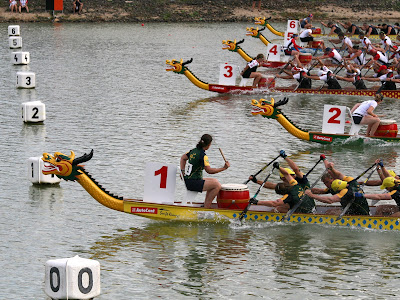
Senior Mixed 500m Final - "Instead I felt something spiritual; I know that I rode with a higher purpose that day." Lance A - "Don't Wonder 'What If?'" Jenny P – Prague/Racice - Day 4 - 29 Aug 2009
I felt an emotion at the finish line that I've never experienced again. I felt I was winning for Fabio and his family and his baby, and for the mourning country of Italy. As I came across the line I glanced upward and I pointed to the heavens, to Fabio.

World Champs - Australian Senior Mixed 500m Team - "As I came across the line I glanced upward and I pointed to the heavens" Lance A – Prague/Racice - Day 4 - 29 Aug 2009
After the Tour, Och had a memorial built for Fabio. He commissioned a sculptor from Como to execute a work in white Carrara marble. The team flew in from all over the world, and we gathered at the top of the mountain for the placement of the memorial and the dedication ceremony. The memorial had a sundial on it that shone on three dates and times: his birthday, the day he won the Olympic Games, and the day he died.

Geoff and Joanne at Fabio’s Memorial - we stumbled upon it by complete accident – Col de Portet d'Aspet - Thu 24 Sep 2009 [1] (picasa)
I had learned what it means to ride the Tour de France. It's not about the bike. It's a metaphor for life, not only the longest race in the world but also the most exalting and heartbreaking and potentially tragic. It poses every conceivable element to the rider, and more: cold, heat, mountains, plains, ruts, flat tires, high winds, unspeakably bad luck, unthinkable beauty, yawning senselessness, and above all a great, deep self-questioning. During our lives we're faced with so many different elements as well, we experience so many setbacks, and fight such a hand-to-hand battle with failure, head down in the rain, just trying to stay upright and to have a little hope. The Tour is not just a bike race, not at all. It is a test. It tests you physically, it tests you mentally, and it even tests you morally.
I understood that now. There were no shortcuts, I realized. It took years of racing to build up the mind and body and character, until a rider had logged hundreds of races and thousands of miles of road. I wouldn't be able to win a Tour de France until I had enough iron in my legs, and lungs, and brain, and heart. Until I was a man. Fabio had been a man. I was still trying to get there.
[1] I would like to think the two shadows on the “Wings” of the Memorial represent the spirit of Jenny and her life as a twin with Joanne.. There we are, Joanne and I, counterpoised by the twin shadows of the Joanne and Jenny. Jenny overlooks us and is there with us, Always.

Jenny - "looking out over us - she inspires and guides us from above" - Geoff E - Wolfe Creek Crater, WA - 22 May 2001"

Jenny, Geoff, Joanne - St George - 22 Aug 2006
I read the following extract to Jenny twice while she was in Hospital in June 2009. The first time was two days after the surgery to remove a 4cm brain tumor. She listened intently - like a small child being read a fairy tale - while I struggled to remain composed, as I read it to her.

The second time was in the Intensive Care Unit at St George following her "heart failure" episode 6 days earlier (Tue 23 Jun 2009) – a day before she left us on the 30 Jun 2009 at 9:16am. I think and hope she heard me. This little story for me is the essence of the Book, a book she treasured, and ultimately it reads as a "prophecy" for what would unfold in Prague in late August 2009 for Joanne and myself - hope this makes sense .. Geoff

IT’S NOT ABOUT THE BIKE – LANCE ARMSTRONG
If there is a defining characteristic of a man as opposed to a boy, maybe it's patience. In 1995, I finally gained an understanding of the demanding nature of the Tour [de France] and all of its extraordinary tests and dangers. I finished it, and I finished strong, winning a stage in the closing days. But the knowledge came at too high a price, and I would just as soon not have learned it the way I did.
Late in the race, our Motorola teammate, Fabio Casartelli, the 1992 Olympic champion, was killed on a high-speed descent. On a descent, you ride single file, and if one rider goes down, it can cause a terrible chain reaction. Fabio didn't crash alone; 20 riders went down with him. But he hit a curb with the back of his head and fractured his neck and skull.
I went by too fast to see much. A lot of riders were down, and everybody was crouched around someone lying on the ground, but you see that sort of thing a lot in the Tour. It was only a while later that I learned via the team radio what had happened: Fabio was dead. When they tell you something like that, you almost don't believe it.
It was one of the longest days of my life. Fabio was not only the young hope of Italian cycling, he was a new husband and a new father. His baby was just a month old.

We had to keep riding, to finish the stage even though we were distraught and sick with shock. I had known Fabio since I first started racing internationally in '91. He lived right outside of Como where I kept my apartment, and we had competed against each other at the Barcelona Olympics in '92, when he won the gold medal. He was a very relaxed, fun-loving man, a little goofy, a joker. Some of the top Italians were more serious, or macho, but Fabio wasn't like that. He was all sweetness.
That night we had a Motorola team meeting to discuss whether we should keep riding or not. We were split. Half of us wanted to quit and go home and cry with our families and friends, and half of us wanted to keep riding in honor of Fabio. Personally, I wanted to stop; I simply didn't think I had the heart to ride a bike. It was the first time I had encountered death, and genuine grief, and I didn't know how to handle it. But then Fabio's wife came to see us, and she said she wanted us to keep riding, because she felt that was what Fabio would have wanted. So we sat in the grass behind the hotel, said a few prayers, and decided to stay in.

The next day the peloton rode in honor of Fabio, and gave our team a ceremonial stage victory. It was another long, terrible day— eight hours on the bike, with everybody grieving. The peloton did not race. Instead we rode in quiet formation. It was virtually a funeral procession, and at last our team rode across the finish line, while, behind us, Fabio's bike was mounted atop the support car with a black ribbon.
The following morning we began the race again in earnest, and rode into Bordeaux. Next was a stage into Limoges, and that night, Och came around to our rooms and told the team that Fabio had had two goals in the Tour: he wanted to finish the race, and he especially wanted to try to win the stage into Limoges. As soon as Och stopped speaking I knew that if Limoges was the stage Fabio had wanted to win for himself, now I wanted to win it for him, and that I was going to finish the race.
About halfway through the next day's stage, I found myself grouped with 25 guys at the front - Indurain was in the yellow leader's jersey, riding at the back. I did what came most naturally to me: I attacked.
The problem was, I attacked too early, as usual. I went with 25 miles still to go, and on a downhill portion. Two things you never do: attack early, and on a downhill. But I went so fast on that downhill that I had a 30-second lead in a finger-snap. The other riders were completely taken aback. I could feel them wondering, What's he thinking?
What was I thinking? I had looked back, and saw guys were riding along, with no particular ambition. It was a hot day, and there was no incentive to pull hard, everyone was just trying to get closer to the finish line where the tactics would play out. I glanced back, and one guy was taking a sip of water. I glanced back again. Another guy was fixing his hat. So I took off. Peoooo. I was gone.
When you have 15 other guys back there from 15 different teams, they'll never get organized. They'll look at each other and say: You pull. No, you pull! So I went, and I went faster than I'd ever ridden. It was a tactical punch in the face, and it had nothing to do with strength or ability; everything depended on the initial shock and separation. It was insane, but it worked.

Nobody got within 55 seconds of me again. The team support car kept coming up and giving me reports. Henny Kuiper, our team director, would say, "You're thirty seconds up." Then a few minutes later he'd come alongside again and say, "You're forty-five seconds up."
When he came up the third or fourth time, I said, "Henny, don't come up here anymore. I'm not getting caught."
"Okay, okay, okay," he said, and faded behind my wheel.
I didn't get caught.
I won by a minute, and I didn't feel a moment's pain. Instead I felt something spiritual; I know that I rode with a higher purpose that day. Even though I had charged too early, I never suffered after I broke away. I would like to think that was Fabio's experience too; he simply broke away and separated from the world. There is no doubt in my mind that there were two riders on that bike. Fabio was with me.

I felt an emotion at the finish line that I've never experienced again. I felt I was winning for Fabio and his family and his baby, and for the mourning country of Italy. As I came across the line I glanced upward and I pointed to the heavens, to Fabio.

After the Tour, Och had a memorial built for Fabio. He commissioned a sculptor from Como to execute a work in white Carrara marble. The team flew in from all over the world, and we gathered at the top of the mountain for the placement of the memorial and the dedication ceremony. The memorial had a sundial on it that shone on three dates and times: his birthday, the day he won the Olympic Games, and the day he died.

I had learned what it means to ride the Tour de France. It's not about the bike. It's a metaphor for life, not only the longest race in the world but also the most exalting and heartbreaking and potentially tragic. It poses every conceivable element to the rider, and more: cold, heat, mountains, plains, ruts, flat tires, high winds, unspeakably bad luck, unthinkable beauty, yawning senselessness, and above all a great, deep self-questioning. During our lives we're faced with so many different elements as well, we experience so many setbacks, and fight such a hand-to-hand battle with failure, head down in the rain, just trying to stay upright and to have a little hope. The Tour is not just a bike race, not at all. It is a test. It tests you physically, it tests you mentally, and it even tests you morally.
I understood that now. There were no shortcuts, I realized. It took years of racing to build up the mind and body and character, until a rider had logged hundreds of races and thousands of miles of road. I wouldn't be able to win a Tour de France until I had enough iron in my legs, and lungs, and brain, and heart. Until I was a man. Fabio had been a man. I was still trying to get there.
[1] I would like to think the two shadows on the “Wings” of the Memorial represent the spirit of Jenny and her life as a twin with Joanne.. There we are, Joanne and I, counterpoised by the twin shadows of the Joanne and Jenny. Jenny overlooks us and is there with us, Always.


Tuesday, April 26, 2011
Do You See What I See? - Hunters & Collectors (1988) (youtube)
The song ends with the lyrics:
Do you remember?
I said do you remember?...
Yes, I remember now. I saw Hunters & Collectors play this song at a Concert in Boston in October 1988. They were the support act for Midnight Oil. I had forgotten about this when I put together yesterdays post (The Forgotten Years). I kept thinking last night, that I had seen Midnight Oil somewhere else. This song made me remember, as I distinctly remember it being performed at the Concert in Boston. Funny how you can remember some things in the end.
Mark Seymour, the bands lead singer, is also a bit of a runner and he ran the same Melbourne Marathon I ran in 1994. He played some songs to a crowd at the finish line after his run. I remember being very impressed with him and his fitness, as I hobbled back to the Hotel Crossley for an afternoon nap.
Found a live version here and the Lyrics follow ..
Do you see what I see Lyrics
I spy your humble home
I see the tea towels fly
In a blinding flash
I see the years go by
Memories twisted around
Somebody's finger
Behind me now
Oh but I still remember
Do you see what I see?
Do you see what I see?
Do you see what I see?
Do you see what I see?
We go north to the ocean
We drove so far
But last years light is shining hotter than the sun
Looking for someone
In a suburb that I know
But I wasn't round for long
I had somewhere else to go
Do you see what I see?
Do you see what I see?
Do you see what I see?
Do you see what I see?
I see the safest place around
In that city down below
My hands are empty now
And I waving as I go
You were gone for a little while
It was a fine fine line
Between first and second thoughts
We left them all behind
Now we barely faulter
Now the long drive has begun
North to the ocean
Hotter, hotter than the sun
Do you see what I see?
Do you see what I see?
Do you see what I see?
Do you remember?
I said do you remember?...
Tuesday, March 17, 2015
Nothing Really Matters - Eileen Cady / Footprints on the Path

.. "nothing really matters" .. by Eileen Cady
Dwell not in the past,
Use it to illustrate a point;
then leave it behind.
nothing
really
matters
except what you do now
In this instant of time.From this moment onward
you can be entirely different person
filled with love and understanding,
ready with an outstretched hand,
uplifted and positive
in every thought and deed.
Recently had an experience that has forced me to reflect on life more than I normally would.
I recently had to abstract my experience down to a txt message, so someone could appreciate and understand what I went through during and after this experience. Here it is:
I saw the generosity, concern and empathy of complete strangers. I saw first hand the diversity, strength and professionalism of our Rescue Services - I'm in awe of them. I saw the importance of life and how fragile our connection is with it.I'm proud of my decisions and my actions that day, I think it helped save someones life.
Due to circumstance and/or privacy laws, it is not possible to thank all those people who helped that day, so I say it here - THANK YOU.
An experience like that makes you reflect a lot and in some ways it was life changing - a spiritual experience actually.
I have dwelt on this for far too long and it has had a bigger impact (both negative and positive, oddly enough) on me than I could ever imagined.
It is now time to acknowledge that it did happen for the first and last time here. And it is also now time to leave it behind. Let it go!!!
And so that is that.

Saturday, March 7, 2015
Remembering Tim - Norwood Park Crematorium / Canberra (Fri 11 Mar 2005)

Today, 10 years on, we Remember Tim:
Timothy Francis Eldridge was born on Wednesday 4 December 1963 in Tamworth NSW. He became the third and youngest child of Thomas and Betty. He had an elder sister, Lynn, spelt with two n's not one as Tim persisted throughout his whole life). Lynn was two years older than Tim. Myself, Geoff being 3 years older was the eldest. His father was an electrical engineer with the Electricity Commision of NSW. The Regional Centre was based in Tamworth and from this office the electricity transmission system in northern NSW grew. The nature of his Father's work often required nights away from home. We all looked forward to Dad's return on Friday Night with a bag of mixed lollies for all.Lynn and I found as oursleves at school and this gave Tim two years at home with Mum by himself. Mum tells me now that he spent this time playing with the kids across the road. Even at this early age Tim was making friends. I seem to recall also that Tim managed to get a 1/2 day of pre-school (a first in the family). I always felt that this small period with other new kids gave Tim a nice head start when he commenced his schooling at South Tamworth Primary. He was well adjusted for the rigours of school, made friends easily (he was always going to birthday parties) and was a natural at anything he put his mind to.
He started in the top class in Kindy and there he stayed each year through his primary school days (and subsequent educational endeavours). Tim was a also a natural athlete and started playing rugby league at he age of eight, moving quickly onto soccer and then finally hockey (all in one year .. maybe this was a sign of things to come). He played representative hockey for Tamworth at the state champships every June Long Weekend. I even recall him playing under 12 hockey at Lismore when he was only 9. He was a prodigy even then. He also represented the North Western NSW primary school team in Murwullumbah where his team came back as state champions. Another little publicised sporting achievement was middle distance running and I remember him running a low 2 minute 800 meters at the Tamworth Primary Schools Athletic Carnival. A record that was not broken for many years.
The year Tim finished his primary school saw the Eldridge family move from Tamworth to Wagga for Dad's work. This was a tough time for everyone but we all adapted to new environs and our new high school in Wagga called Kooringal High. It was a new school and much smaller than the high school Lynn and I left in Tamworth. Probably 1/4 the size in students and was so new that it did not even have a sixth form in our first year there. Tim as always fitted in very quickily and he found new friends almost instantly. Many of whom are here today.
By the time Tim reached Wagga he had found the game of golf and before long he was swinging a set of clubs out at the Wagga Country Club, across the lake from where we lived. Here he spent many hours fine tuning his tee shots, fairway shots, chips and putts (or spits as his young nephew would subsequently refer, many years later). Golf was to become a life long passion and this was something which always stayed with him. It was only his 94 year old grandfather who thought something was wrong four weeks ago when he percieved Tim had lost interest in his Golf.
Tim breezed through high school and obtained excellent grades with little effort. In his final year he was nominated as perfect (whooops I meant "a prefect") and was voted school vice captain by his peers. For his HSC he studied a couple of hours each night on the floor in front of the TV. To recover from this strenous study regime, he would spend the next day playing 36 holes of golf.
With his HSC behind him Tim entered the University of Sydney and worked his way towards a Civil Engineering degree over a four year period. The first two years of his course, Tim lived at Wesley College, a residential college on the grounds of Sydney University. Here, Tim, along with some of high school buddies quickily adapted to the demanding University life style. Days at the beach, missing lectures, drinking beer, etc. He found new friends quickily and again many are here today. The nucleaus of this group were quickily dubbed the "DAMAGE BOYS" because of the drinking reputation at College Victory Dinners, formals and other ramdon gatherings.
Mid way through his second year, Tim's father Thomas passed away suddenly at the early age of 47 after a sunday afternoon hockey match. It was my job to tell Tim the news that Sunday night. I now remember his numb response to my news. "Where has he gone?" he asked. His fathers death at such a young age for all of us was a defining moment in Tim's life (probably the most defining moment up until last Saturday). It was a difficult time for Tim and the Family. Initially he seemed to cope well, but the next year saw Tim arrive home to Wagga unannounced many times during the university terms. I guess the one lesson (or theory actually I would call it a LAW) Tim would give us today from all this would be to grieve properly, seek support from Family, Friends and professionals and to address the difficult issues these tramatic events have on the fragile human soul.
Anyway, back to Uni, Tim bravely persisted and graduated with honours at the end of 1985. His brief but eventful civil engineering career started with a small but prestigous Civil Engineering Consultating companycalled Wargon, Chapman and Partners. Mr Wargon, a famous Amercican civil engineer appeared to take Tim under his wing and Tim quickily found himself designing car parks, and tall buildings. As well as doing one-off type jobs such as a structural integrity report of the Channel 9 Transmitter Antenna at the Channel 9 Compound, and preliminary designs for the now Sydney Harbour Tunnel.
Tim quickily realised that Civil Engineering was not for him (however a recent rush of activity with home decks shows there was some latent interest in at least some things civil). On the fifth redesign for an Alan Bond tower on the old Waltons site across from the Sydney Town Hall, Tim decided to move on. This gave him the chance to travel for 3 months overseas which took him to many places in Europe, England, particularly London and even India (if I recall correctly).
London was a place to which Tim would return frequently over the rest of his life, the last being July/August last year. The drawcards to London were friends and another life passion I have not yet mentioned, English Football. His favourite team during his schools days was Queens Park Rangers. Though his interested waned when their goalie Phil Parkes defected to my team West Ham in 1977 for a then world record sum of 565,000 pounds. Subsequent years and more recently Tim has been an Arsenal supporter.
On his return in the late 80's Tim persued his ambition for a new career. In this pursuit he found himself in Canberra studying part-time for a degree in Information Systems at the then Canberra College of Advanced Education and working part-time for small scientific software consulting firms. One system I remember was a flight simiulator program driven by data from aircraft black-box recorders.
On graduation from the CCAE Tim started work at Customs and then Department of Veterans Affairs for a record three years. Towards the end of this stint in DVA, Tim bought his house in Griffith, just up from Marnucka. He lived in the house briefly before deciding that a six month stint in Los Angles working on a Telon Related Inventory system was the go. On his return he decided to work in Sydney and here he had stints at NRMA and Westpac. Weekends saw Tim travelling back to his home in Canberra to catch up with friends and to play golf amongst other things. This became too tiring and before long he was back in Canberra fulltime working at the Australian Tax Office and subsequently Customs. His crowning software achievement was an ATO case-actioning tool which I believed was to be a distillation of systems and processes from the many places he had worked.
More recently, Tim returned to DVA where he ventured into web-based systems using packages such as Websphere and Tomcat.
Wherever Tim worked, he took the roles on seriously. He appeared to very much love a process and a set of rules to capture and implement. He believed rules were meant not to be broken (contrary to the majority of the population) and I always thought that he was perfect fit for the ATO. [He had a great sense of what was right and doing it right].
Another constant in Tim's life were his friends and I will always remember his 40th birthday speech where he said the party was not to celebrate his 40th, but more importantly, a chance for his family and friends to get together.
There is so much more to be said. We all have our memories of Tim and I ask you for just one moment to reflect on the good times you had with him ... and to take this forward with you through the tough times ahead.
It is now time to say goodbye to a loving son, brother, grandson, nephew, uncle, friend and colleague. We now know that Tim struggled with a delibertating and destructive illness which he held undercover for many years. I ask you to take the time to consider the strength he showed under this enormous pressure and to admire him for how he lived a relatively normal and happy life, shared with friends and family.
In the end Tim ran out "Puff" as he said and found peace from his illness the only way he knew how. Please forgive him. He asked for this.
Tim, you asked me where Dad had gone. We know that you searched for him high and low. We also now know that you have found him. The search and struggle is complete and that you have found your peace.
You will always have a special place in our hearts and memories. We will miss you.
Love .. Mum, Lynn and Geoff ..
Thursday, March 14, 2013
On Photography - Garry Winogrand and People Photography - Blake Andrews (Tue 12 Mar 2013)

Blake Andrews (*) writes about Garry Winogrand (*):
I think Winogrand's attraction to photographing people was psychological. He liked to play with figures as compositional figures, but more importantly he liked to get inside their heads. Many of his photos are like X-Ray visions. They burrow right into the thoughts of the characters. It's not easy to make photos like that without bogging down in sentimentality, without the thoughts becoming the primary subject. I see a lot of portraits nowadays concerned with that penetration, but they often leave the rest of life behind. Winogrand somehow combined X-Rays with surface level reality in a way that I think is rare. I know I can't do it.via More thoughts on Winogrand (*) by Blake Andrews (*).
Saturday, December 12, 2009
Thank You: RPM ..
I started RPM (an interval based stationary bike programme with 7 cherographed training tracks) at Sydney University's Aquatic Centre's RPM Studio on Fri 11 May 2007. I was so "pumped" and I can still remember calling Jenny almost straight after the session to say that it was everything (plus more) that I hoped it would be. Jenny and Jo had told me about their "Spinning Classes" and how much they enjoyed it. I had finally found the same thing - thanks Jenny and Joanne.

RPM Studio - Sydney Unit Aquatic Centre (Mon 30 Nov 2009)
I had been toying with the idea of doing some Group Fitness at the Sydney Uni Gym. My membership at the time allowed me to use the Gym equipment only. The previous weekend I had successfully trialled for the Australian Senior Open's Dragon Boat team to participate at the 2007 IDBF World Dragon Boat Championships. I was looking for something new and thought I needed to try something different, to compliment the running I was doing for my cardio.
I was a little nervous about the joining the Group Fitness Programmes and in my normal way, I put it off until I read a blog post by Drew Ginn titled:
I had been following Drew's Blog for a few months. I had really connected to his writing style (particularly the grammatical and spelling errors :-) and found all his articles to be very motivating. Being a Rower, his articles could easily be translated and related to my world of dragon boating [in actual fact, I have felt that I have almost lived a parrallel life, though not quite at the same level :-) ]

Vincent and Geoff - RPM Sydney Uni Aquatic Centre (Fri 27 Nov 2009)

Heart Rate - First RPM Class - Fri 11 May 2007 (Vincent)
The Ridden into the ground and loving it post was a motivating story, but it was the following quotes that really caught my eye:
[..] The remarkable thing is each time I go into this place, into this zone I find something special, something new. [..]
[..] The pleasure is in the relationship the lies within the range and scope of extremes. The vastness of feelings marks a cycle. Not just the one we ride but the one that is ever present inside us. [..]
These were the feelings I wanted to explore more. Maybe RPM could accelerate what I had already learnt in the boat.
RPM has turned out to be one of the best decisions I have ever made regarding my development. It has been everything I hoped it would be, plus more.
What have I found in RPM? I have found many things: discipline, the cherography for each track requires a mental discipline. A sense of timing and feeling: the music and tracks require a feeling for the beat and rythym - much like the feeling you need to find when paddling. The interval based workout requires a measured approach to your effort. On top of all of this you become very fit.

Ali and Geoff - RPM Sydney Uni Aquatic Centre (Mon 30 Nov 2009)
When I first started I would hide in the middle of the class and try not to be noticed as I do with most things. As my confidence and understanding grew, I bought a pair of bike shoes with clips (the 2007 Tour de France really motivated me there). With the new shoes, I had to move upto the front row where the bikes with toe clips were. It was a great move. It helped me with my dragon boating (even more), where I had just started to stroke (i.e. sit in the front seat). I started to develop a sense of feeling the energy, and timing behind and around me - it is very similiar to stroking a boat.

Loulou and Geoff - RPM Sydney Uni Aquatic Centre (Tue 01 Dec 2009)
One of the bests parts of RPM for me has been the people. Vincent is the head instructor at the Gym and has worked (and still teaches instructors across Australia) for Les Mills (an Auckland based company) who run and develop the RPM Programme worldwide. James has been an instructor for years and is probably one of the best instructors in Australia - he brings his mountain bike experiences to the class. I have seen both Ali (she started the same time as me) and Loulou go from participants to intructors who run amazing classes and bring their own personalites to each session. Vincent has taught them well, it has been a delight for me to watch their progress and development. As I said, this has been one of the best parts of RPM for me and they have inspired me in my own endeavours.

James and Geoff - RPM Sydney Uni Aquatic Centre (Wed 02 Dec 2009)
These people have contributed significantly to make me the person and athlete I am and I can't thank them enough. Just recently I personally thanked each person and gave them a copy of Jenny's Gold Medal story with a big thank you for their part in my development. Also took the chance to get a photo.
Thank you Vincent, Ali, Loulou and James and all the RPM team at Sydney University Aquatic Centre.
Geoff

I had been toying with the idea of doing some Group Fitness at the Sydney Uni Gym. My membership at the time allowed me to use the Gym equipment only. The previous weekend I had successfully trialled for the Australian Senior Open's Dragon Boat team to participate at the 2007 IDBF World Dragon Boat Championships. I was looking for something new and thought I needed to try something different, to compliment the running I was doing for my cardio.
I was a little nervous about the joining the Group Fitness Programmes and in my normal way, I put it off until I read a blog post by Drew Ginn titled:
I had been following Drew's Blog for a few months. I had really connected to his writing style (particularly the grammatical and spelling errors :-) and found all his articles to be very motivating. Being a Rower, his articles could easily be translated and related to my world of dragon boating [in actual fact, I have felt that I have almost lived a parrallel life, though not quite at the same level :-) ]


The Ridden into the ground and loving it post was a motivating story, but it was the following quotes that really caught my eye:
[..] The remarkable thing is each time I go into this place, into this zone I find something special, something new. [..]
[..] The pleasure is in the relationship the lies within the range and scope of extremes. The vastness of feelings marks a cycle. Not just the one we ride but the one that is ever present inside us. [..]
These were the feelings I wanted to explore more. Maybe RPM could accelerate what I had already learnt in the boat.
RPM has turned out to be one of the best decisions I have ever made regarding my development. It has been everything I hoped it would be, plus more.
What have I found in RPM? I have found many things: discipline, the cherography for each track requires a mental discipline. A sense of timing and feeling: the music and tracks require a feeling for the beat and rythym - much like the feeling you need to find when paddling. The interval based workout requires a measured approach to your effort. On top of all of this you become very fit.

When I first started I would hide in the middle of the class and try not to be noticed as I do with most things. As my confidence and understanding grew, I bought a pair of bike shoes with clips (the 2007 Tour de France really motivated me there). With the new shoes, I had to move upto the front row where the bikes with toe clips were. It was a great move. It helped me with my dragon boating (even more), where I had just started to stroke (i.e. sit in the front seat). I started to develop a sense of feeling the energy, and timing behind and around me - it is very similiar to stroking a boat.

One of the bests parts of RPM for me has been the people. Vincent is the head instructor at the Gym and has worked (and still teaches instructors across Australia) for Les Mills (an Auckland based company) who run and develop the RPM Programme worldwide. James has been an instructor for years and is probably one of the best instructors in Australia - he brings his mountain bike experiences to the class. I have seen both Ali (she started the same time as me) and Loulou go from participants to intructors who run amazing classes and bring their own personalites to each session. Vincent has taught them well, it has been a delight for me to watch their progress and development. As I said, this has been one of the best parts of RPM for me and they have inspired me in my own endeavours.

These people have contributed significantly to make me the person and athlete I am and I can't thank them enough. Just recently I personally thanked each person and gave them a copy of Jenny's Gold Medal story with a big thank you for their part in my development. Also took the chance to get a photo.
Thank you Vincent, Ali, Loulou and James and all the RPM team at Sydney University Aquatic Centre.
Geoff
Friday, December 7, 2012
On Photography - I love to make portraits - Kirk Tuck (Fri 07 Dec 2012)

Kirk Tuck (*) writes about the beauty the wonderful relationship he has with photography in (*):
I love to make portraits.Another amazing piece of writing about photography by a professional photographer. Got to love that. Thanks Kirk.
I love that not all of my subjects are required to smile.
I love that we can spend time talking about life while we're making portraits.
I love to work in black and white but I don't fear color.
I love light that can be both dramatic and flattering.
I love the contrast of dark shirts against light skin.
I love longish lenses and continuous lights.
I love going back and looking at old contact sheets to look at the "paths" not taken and then re-scanning and reprinting to see if my tastes have grown or changed since we last peeked into the contact sheets and made our choices.
[1] Random Recollection - This is a photo of my Grandfather (my Father's Father). My brother, along with my Aunt took him on a drive and at my Aunt's suggestion we ended up at John Sharman's Art Gallery. My Aunt knows him well and she has a few of his paintings. John had also made some paintings from the cliff on the edge of my Grandfathers property at Malua Bay. One of the paintings is the unframed painting behind my Grandfather. This is a nice reminder of my childhood days spend at Malua Bay with my Grandparents.
I have a few more portraits from that day which I will publish here at some stage.
Tuesday, March 22, 2011
More Than a Feeling (Boston) by Igor Presnyakov [YouTube]
More than a feeling
And I begin dreaming
Just amazing!!! Igor's performance, skills and passion are breathtaking. Just love watching his fingers and his face.
Following on from the previous post ..
A Couple of Random Memories: The original Boston version of the song was released in 1976, the year my family moved from Tamworth to Wagga Wagga. Would have been in 4th Form (or Year 10 as it is called now). Just a kid. Remember being very sad to leave Tamworth (we had moved to Tamworth from Goulburn when I was a few weeks short of the age of 2) as it was all I knew (have very few childhood memories before starting school).

I have always said that while the move was difficult in the initial stages, it was one of best things to happen to me in many ways. It was a quite a formative experience to be separated from everything you had ever known and to have to start all over again. I think it helped me to accept change (particularly when you have no choice - you just have to accept it and make the most of it) and made me more resilent to the impact change can have on you, particular in the early stages of the change (hope that makes sense).
Have been to Boston quite a few times - 1988, 1990, 1991 and 1994. Planning to spend a few days there following Tampa 2011 in August 2011. Been a while, so looking forward to seeing it with another 17 years of life experiences behind me. Had always hoped to run the Boston Marathon which is held on Patriot's Day (3rd Monday of April). I tried to qualify by running the Melbourne Marathon in 1993, but was about 8 mins short of the pre-qualifying time of 3hr 15min (it was a bit easier in those days). Was lucky enough to be in Boston to watch the 1994 Boston Marathon.


Friday, November 19, 2010
Annie Leibovitz - Sydney Morning Herald (Nov 2010)
The Annie Leibovitz exhibition Annie Leibovitz: A Photographer’s Life 1990–2005 has just opened at Sydney's Museum of Contemporary Art. Here are three articles that have featured in the Sydney Morning Herald over the last two weeks.

Annie Leibovitz - Spectrum (Cover) / Sydney Morning Herald - 06 Nov 2010

A life in Photography by Robert McFarlane - Spectrum (Page 6) / Sydney Morning Herald - Sat 06 Nov 2010

A life in Photography by Robert McFarlane - Spectrum (Page 7) / Sydney Morning Herald - Sat 06 Nov 2010

Life and death, put into perspective by Joyce Morgan - Sydney Morning Herald - Wed 17 Nov 2010 (Article)

Annie Leibovitz - The Diary - Sydney Morning Herald - 19 Nov 2010
Also see Beyond the flashing bulbs of fame by Andrew Taylor (Sun 14 Nov 2010) ..
Leibovitz's disdain for celebrity is reflected in "Annie Leibovitz: A Photographer's Life 1990-2005", which opens at the Museum of Contemporary Art on Friday.
Just a third of the exhibition features the high-profile names that have turned Leibovitz into a celebrity. There are more images of family and friends and 40 photos include documentary shots of lives ruined by war in the former Yugoslavia and Rwanda.
MCA's director Liz Ann Macgregor said these were her favourite works: "Two of these unforgettable images achieve their strength by showing what is not there – in the absence of victims, we see only the aftermath of war and the bloodshed left behind."
In contrast, Leibovitz said the intimate shots of her parents on the beach and brother and father posing bare-chested, arms crossed, were her "most important work".
"It tells the best story, and I care about it. You don't get the opportunity to do this kind of work except with people who you love: people who will put up with you."
I have enjoyed seeing the personal side of Leibovitz's work and will definitely go to the exhibition.
Have a copy of Susan Sontag's (Leibovitz's Lover) Monograph On Photography which I bought in Canberra in 2002. It seemed an odd relationship because of Sontag's views on photography. I could empathise with their situation with Sontag's journey with Breast Cancer and I remember following the news of Sontag's final weeks and then reading Sontag's New York Times Obituary.
Like all professional photographers, there is definitely a private side to Leibovitz's Photography and I am sure most photographers like myself want to see the private side.
I look forward to viewing the exhibition. I saw the exhibition's book a few years ago. What I really look forward to, though, is the Landscape Photograph work which will feature in future book titled Pilgrimage.
Monday, March 10, 2014
A Message To The Broken - You are not Without Hope - Doug Miller (Sun 11 Oct 2009)

Doug Miller (*) writes On Hope (*):
Hope (*) is a thread that exists in our lives. It has been there since the day we took our first breaths. It has existed alongside us as we built our lives. It exists now in the shattered reality of brokenness. Though we are broken, hope remains strong. In our weakness Hope rises as an unbroken thread stretching out into our uncertain (*) future (*), beckoning us to follow and explore the potential that lies dormant and hidden by our pain. Hope waits. Ready for us to reach out and grasp its firm hand. The question is not if hope exists within our brokenness. The real question is if we are willing and able to allow ourselves to stretch out of our brokenness, our preconceived attitudes, and self imposed assumptions and grasp hold of the only hope that exists, the only hope for our brokenness, our humanity and very existence. There is hope and healing and a future no matter what our circumstances. It is true. I have seen it. There are many others that have shared in it as well and testify of its existence and power and potential. Lift your eyes out of the brokenness and glimpse it, it is before you. You are not alone.via A Message To The Broken (*) by Doug Miller (*).
You are not without HOPE.
An amazing piece of writing. All the more so, if you know the motivation (*) behind it.

Thursday, December 8, 2011
What I think about when I think by the side of the River Charles - Boston (Mon 22 Aug 2011)


On a whim, I recently bought myself a copy of Haruki Murakami's (*) book, What I Talk About When I Talk About Running (*). As I read it, I was quite taken by the following passage ..
It's been 10 years since I lived in Cambridge [Boston]. When I saw the Charles River again, a desire to run swept over me. Generally, unless some change takes place, rivers always look the same, and the Charles River in particular looked totally unchanged. Time had passed, students had come and gone, I'd aged ten years, and there'd literally been a lot of water under the bridge. But the river has remained unaltered. The water still flows swiftly, and silently, toward Boston Harbour. The water soaks the shoreline, making the grasses grow thick [..]I sat beside the River Charles. It was late afternoon on the last day of our 4 days in Boston. We had arrived on the Friday from a week in New York. Here are a few photos from my time sitting by the River Charles.
Maybe because it's the home of the Boston Marathon, Cambridge is full of runners. The jogging path along the Charles goes on forever, and if you wanted to you could run for hours. The problem is, it's used by cyclists, so you have to watch out for speeding bikes whizzing past from behind. At various places, too, there are cracks in the pavement you have to make sure you don't trip over, and a couple of long traffic signals you can get stuck at, which can put a kink in your run. Otherwise, it's a wonderful jogging run.
We had already been away for a day short of 4 weeks and it would be another 3 weeks before arriving back home. I was enjoying the trip but was thinking a lot about all the changes that had been occurring in my life - I was without a car and I had moved back to Kirrawee while I waited for my house, I had never really planned or contemplated to live in, to become available while I was away. Tried not to think about these things too much from a far, as I had no control over them. Instead, I just sat myself down on a seat bench by the River Charles and tried to think of other things.
I sat there in the beautiful afternoon sun, I thought of many things. I thought of all the other times I had been to Boston, what took me there and what I did while I was there. I also tried to remember who I was and what I was doing in my life around the time of each trip.
September and October 1988 was the first trip, and it would be just under a year before I would meet Jenny for the first time.
I reflected on the two years since Jenny had left us and all the things that happened since that time. In some ways, it was just sitting there by the River Charles, that I finally stopped and had a chance to clear my thoughts and to really think about things.
I had really kept myself busy and distracted since Jenny's passing (*) - it was one way of coping with the enormity of Jenny's loss. In some ways, I was starting to forget things - who I was, the things that we had done and what I thought I was going to do with my life.
As I sat there by the River Charles, I watched the walkers, runners and bicycle riders go past. Their long shadows, created by the late afternoon sun, are what struck me and this is what kept me interested as I captured these photos. I wondered who these people were, what had brought them to Boston and whether one of them was the future creator of the next social media craze.
A couple of rowers set off from near where I sat and I wondered if they were the Winklevii (*) of Facebook fame (*).

As I sat there I could see tiny sail boats, standup paddle boards and wind surfers. One wind surfer was fairly inexperienced and a more experienced wind surfer went to his aid, if only to provide advice and moral support, in the knowledge of just being there.
The small sailing boats were from MIT, which is just across the River, and it was only when I saw through the transparent sails, that I realised that in reverse, MIT, spells TIM, my late Brother's name - so I thought about him for a little while. He had been to Boston a few times also, so I thought about all the same things for Tim. Maybe he had sat here and pondered some of the same things, 25 years earlier? I also wondered why I had never made the MIT to TIM connection. Or thinking about it now, I think I may have thought about it a long time ago, but maybe I had forgotten remembering the connection.
Have been to Boston four times prior to this trip and I have visited it on each of my trips to the USA. The last time was just over 17 years earlier in April 1994, where I had hoped I might be able to run the Boston Marathon (*).
Now as I sit here and think about the things I thought about by the River Charles in Boston that late afternoon on Mon 22 Aug 2011, I can now see where Haruki Murakami's (*) ran along the side of the same river on the very path he captured in words above and I have captured in the photos on this page. I also now have an appreciation and can imagine where he found part of the inspiration to write What I Talk About When I Talk About Running (*), which I am now reading and enjoying.
That will do for now. Just leave it here.

A bit of ramble to mark my 700th Post here.
Thursday, February 24, 2011
Evict - PACT - Railway Parade / Erskineville (31 Jul 2005)

Mentioned in a recent post (Sun 20 Feb 2011) that I have often photographed this Roller Door of PACT. Typically, I use this scene to take the first photo of a new digital camera.
The above photo was one of the first photographs I took with a new Canon Powershot Pro1. It was late in the afternoon and I liked the long shadow (see here specifically) of the power pole behind and to my right. I would use this camera for all my Europe 2005 photos. It was a beautiful camera and it failed on me when we did our last walk on the main range with Jenny on the 01 Jan 2009.
Today I bought a Powershot S95 and this Roller Door was the first photo I took with it. I am a creature of habit for sure. Once I get it off the camera I will post it here.
Saturday, July 18, 2015
On Being a Beginner - Spencer Lum / forwardandopen.com (Fri 17 Jul 2015)

Spencer Lum on being a Beginner and Fear:
When you’re a beginner, the fear isn’t there, because the judgement isn’t there. You can play to your heart’s contentvia email by Spencer Lum.
Ever the Beginner. And maybe that is what you hide behind to justify your own Self Doubts and lack of apparent confidence in yourself.
[An aside] Another time to Let Go of Fear is when All is Lost (or Won). And it can be rewarding and exhilarating when you do.
Friday, October 18, 2013
On Friends - Anastasia Taylor-Lind - Colin Pantall's blog (Fri 18 Oct 1013)

Anastasia Taylor-Lind (*) writes On Friends (*):
Have a stable of friends and colleagues [..] these people can give you enough encouragement (*), motivation (*) and self-belief (*) to plough on and develop ..via Dos and Don'ts of Anastasia Taylor-Lind (*) on Colin Pantall's blog (*).
Had the pleasure of meeting up with Uwe again after 13 years, and also to meet Olja for the first time. Thank you, you were great hosts.
It was nice to recount some old memories - Uwe was the driving force behind some amazing projects, back in the early days of open-source software in the Eiffel World - the eljeiffel project (this blog was a long dormant result of the project). I still use some of the resulting software tools and programing concepts on a daily basis.
It was great to talk about what has happened in the intervening years since we last met, as well as what is happening in our lives now, along with our future hopes.
I look forward to you being my guests sometime in the near future.
Friday, January 28, 2011
Bloody Gum - Royal National Park (Sun 28 Jan 2001)

I took this photo 10 years to the minute (Blogger's time is 19 hours behind Sydney time). It was the first photo that I took with my little IXUS that I thought was more than just a record of an event or a place (and BTW there is nothing the matter with that).
It was a Sunday, the last day of a long weekend (Australia Day was Friday). Jenny and I decided to do a Sunday afternoon drive down into the Royal National Park and end up at Stanwell Top to watch the hang gliders and to have an ice cream.
Along the way we stopped to look at various features and land marks, mainly the coast line.
For some reason I randomly pulled up into a small dirt parking area along the road in a forested area of the Park. I was drawn to the large Gum Trees at the edge of the parking area and noticed the sap oozing from the bark.
Looking at the photos I took that day, most were of the trees from a distance. The above photo was the only one I took up close to the trees. I set the camera to macro mode and I am pretty sure I would have held the camera about 15 to 20 cm from the side of the tree. I remember getting back to Sylvania and looking through the photos from that day and this was the one that caught my eye. It was beyond anything I had captured up til then.
Around the same time I found photo.net and this was one of the first photo's I submitted to my portfolio. Amazingly, I received a number of critiques which were very helpful and they helped guide me along my photographic journey, particularly this one:
this is a great piece. My only complaint is it's on digital. It would make a wonderful Ilfochrome if it were on film -- gallery quality.In many ways the photo and the positive feedback I received help me explore photography in a way I had never expected when I first bought the little camera a few months earlier.
Matthew Kees (22 Sep 2001).
I have tagged many of the photos I have taken with the little IXUS, here. Many have become my Favourite Photo's, which I have randomly rambled about on this blog over the last year or so.
Makes me wonder where the last 10 years have gone.
Finally, if I have added up correctly this should be my 300th post.
Saturday, June 18, 2016
"in the end" - William Robinson (Sat 18 Jun 2016)

William Robinson on in the end:
I just keep painting. In the end, my paintings are a trail of a life that's left behind – whether it's satisfactory or not.via Natural Selectuon - William Robinson's paintings bamboozled art elite, and are now worth a fortune by Candida Baker.
Friday, October 8, 2010
Sydney Life 2006 (3-22 Oct 2006)


Sydney Life
Every year, around 500,000 people come to see Sydney Life in Hyde Park North. The resonance of these images, and their evocative setting in one of Sydney’s most popular public spaces, provides a unique representation of the city’s amazing variety.
From 800 images submitted by 410 photographers, 26 artworks have been chosen by a panel of judges. Again, there is a good mix of established and emerging artists from across the spectrum of the art form, including press, documentary and art photography.
The emphasis this year seems to be upon Sydneysiders enjoying their leisure time. Portraits of people flourishing in their domestic environments such as Joanne Saad’s ‘Karaoke Friends, 2006’, Danny Huynh’s man with his chook in Fairfield, or Martin Mischkulnig’s ‘Ingrid Hoffman with her collection of ‘50s and ‘60s aprons,’ capture worlds hidden behind the suburban fence. Just outside, Adrian Brown’s ‘Cul de Sac 7’ argues that housing estate dead-ends are the place where the next generation of Socceroos are building their skills.
Some photos dwell on the diversity of the city’s subcultures, while others encompass broader cultural activities such as the outdoor cinema and surfing, or capture the beauty of Sydney’s iconic parks. This year’s images are mainly celebratory in tone, however, there are some which speak to alienation, both human and from the natural environment, such as Beverley Veasey’s wonderful ‘Goat, Capra Hircus, at the Royal Easter Show.’
I would like to thank the City of Sydney and AMP Capital Investors for their support of the project. Thank you, too, to my fellow judges. Finally and foremost, thank you to the photographers for capturing with such poignancy the many possibilities for life this wonderful city offers.
The Sydney Life Prize, valued at $10,000, is comprised of $5,000 in cash from the City of Sydney plus a $5,000 investment in the AMP Capital Investors Sustainable Future Australian Share Fund. It will be awarded for the most outstanding work in the exhibition, as decided by a distinguished panel of judges: Sandy Edwards (Curator, Sydney Life and Curator, Stills Gallery), Alan Davies (Curator of Photographs, State Library of NSW) and Bec Dean (Curator, Australian Centre for Photography).
Sandy Edwards, Curator Sydney Life
The diversity of Sydney’s communities is magnificently captured in these photographs mounted on large-scalecanvas against the leafy backdrop of Hyde Park North. Take a wander down the central boulevard and admire these stellar images.
FREE SYDNEY LIFE
CURATORIAL TOURS
Wednesday 18 October and
Saturday 21 October at 1pm
Bookings Essential:
Telephone (02) 9246 7626


The Photographers and their Photos
Gregory McBean - The Baron and Baroness de Boyd (a.k.a. John and Jeanette)
Martin Mischkulnig - Ingrid Hanging her Aprons
Adrian Brown - Cul-de-sac 7
Jonathan Reid - Sydney Park – St Peters
Marco Bok - Mitch and Kay, Hyde Park, 1 July 2006
Kelly Mitchell - Skaters – Martin Place
Tamara Dean - Harmony Day
Beverley Veasey - Study of a Goat, Capra Hircus, at the Royal Easter Show
Steven Siewert - Not a Dry Eye in the House
Quentin Jones - Surfing from Space
Peter Solness - Dharawal Engravings and Sydney Skyline
Martin Mischkulnig - Guan Wei in Boat
Vera Hong - Rebecca
Steve Christo - Fire in his Belly.
Karl Sharp - “Revolution” (soccer fans)
Moshe Rosenzveig - Tango
Anne Zahalka - Chinese New Year Parade
Paul Blackmore - Backyard Wedding
Sasha Ruth Woolley - Natasha, 2005 (From the Limelight Series)
Danny Huynh - Culture and Cultivation
Steven Lojewski - Without a Trace, Enmore, 2006
Belinda Allen - Sacred Site – Angophoras, Royal National Park
Jeff Darmanin - Autumn in Sydney, 2006
Annette Willis - Niki and José 2006
Lee Valentine - Red
At www.archive.org - Sydney Life 2006, Art and About 2006
At Google: Programme (pdf as html)
Subscribe to:
Posts (Atom)